

If you were hurt in a motorcycle crash in Bakersfield or anywhere in Kern County, get medical care, request the crash report, and be careful what you tell the other driver’s insurer. Riders are often blamed by default, and California law lets that blame reduce what you recover. A motorcycle accident attorney in Bakersfield can push back on that early, before the insurer’s version of events hardens.
We are B&D Law Group, APLC. Our Bakersfield personal injury attorneys work from 4900 California Ave, Tower B, 2nd Floor, and handle motorcycle cases across Kern County. This guide covers the riding conditions here, California’s helmet and lane splitting rules, how fault is decided, and the insurance and deadlines that shape a claim.
Riding Around Bakersfield
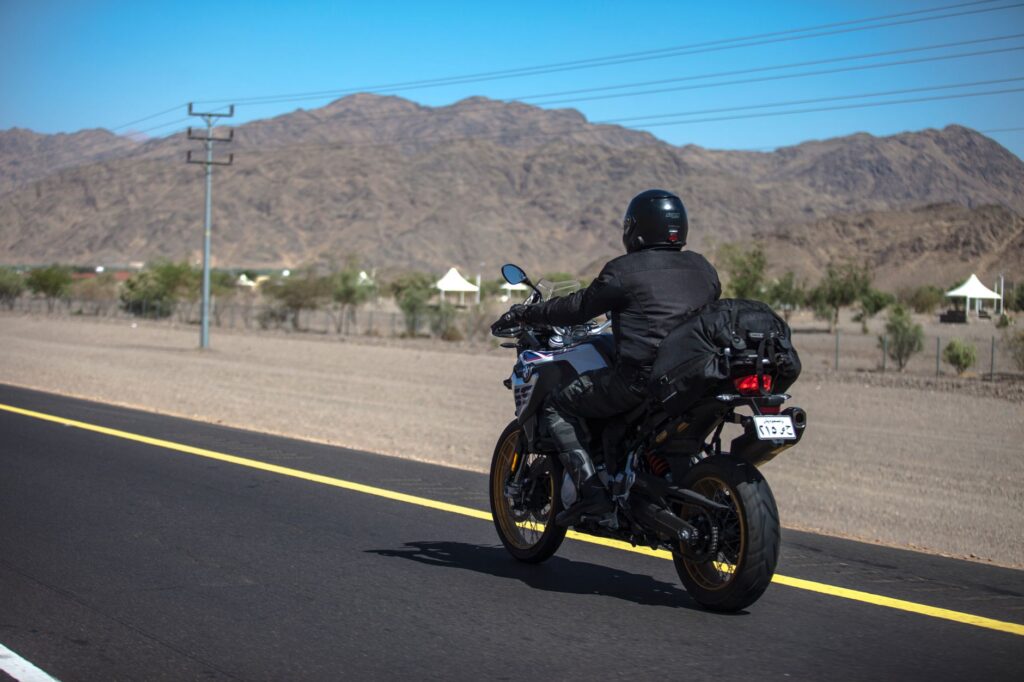
Kern County draws riders for good reason. Highway 178 runs east through the Kern River Canyon, Highway 58 climbs over the Tehachapi Pass, and Highway 99 carries fast traffic straight through the city. Those roads mix riders with heavy trucks, farm equipment and drivers moving at highway speed, and the most common crashes follow a familiar pattern: a driver turning left across a rider’s path, a lane change into a rider the driver never saw, or a rear-end collision in slowing traffic.

California’s Helmet Law
Under Vehicle Code section 27803, every driver and passenger on a motorcycle, motor-driven cycle or motorized bicycle must wear a safety helmet that meets the state’s standards. If you were not wearing one, you can still bring a claim. Expect the defense to argue that a missing helmet made a head injury worse and should reduce your recovery, an argument that depends on the medical evidence and does not apply to injuries a helmet would not have prevented.
Lane Splitting Is Legal, But Not a Free Pass
California defines lane splitting in Vehicle Code section 21658.1, added by AB 51 in 2016, as riding a two-wheeled motorcycle between rows of stopped or moving vehicles in the same lane. It is legal here. Whether a particular lane split was done safely, given the speed of traffic and the road conditions, is still a question of fact the insurer will raise. Our article on where lane splitting is legal covers the rule in more detail.
How Fault Is Decided
California uses pure comparative fault, adopted by the California Supreme Court in Li v. Yellow Cab Co. (1975). If you were partly at fault, your recovery is reduced by your share, but it is not wiped out. That is why evidence matters so much in a motorcycle case: scene photos, damage to both vehicles, witness statements, and video from nearby businesses, which is often overwritten within days. We walk through the fault analysis in how fault is determined in a California motorcycle accident.
Insurance, and Why Your Own Policy Matters
For policies issued or renewed on or after January 1, 2025, California’s minimum auto liability limits are $30,000 per person, $60,000 per accident and $15,000 for property damage. Serious motorcycle injuries often run well past those numbers. Uninsured and underinsured motorist coverage on your own policy can fill part of that gap, which is why we review a rider’s own coverage at the start of every case.
Deadlines to Keep in Mind
Code of Civil Procedure section 335.1 generally gives you two years from the date of injury to file a personal injury lawsuit. If a public entity is involved, for example a dangerous road surface or a government vehicle, Government Code section 911.2 requires a written claim within six months. Motorcycle injury lawsuits arising in the Bakersfield area are typically filed in Kern County Superior Court.
Frequently Asked Questions
Can I still recover if I was not wearing a helmet?
Yes. California requires helmets under Vehicle Code section 27803, but not wearing one does not bar a claim. The defense may argue it made a head injury worse and should reduce your damages, which depends on the medical evidence.
Is lane splitting legal in California?
Yes. Vehicle Code section 21658.1 defines lane splitting and it is legal in California. Whether a specific lane split was done safely can still be argued in a claim.
What if the insurer says I was partly at fault?
California follows pure comparative fault, so your recovery is reduced by your percentage of fault rather than barred.
How long do I have to file a motorcycle accident claim?
Generally two years from the date of injury under Code of Civil Procedure section 335.1, and six months for a government claim under Government Code section 911.2.
More Bakersfield guides: we also cover truck accidents and wrongful death claims in Kern County.
Talk to a Bakersfield Motorcycle Accident Lawyer
Insurers start building their version of a motorcycle crash on day one. We handle these cases through our motorcycle accident attorneys practice and our Bakersfield office. Call (888) 977-2238 or use our contact page.
Attorney advertising. This article is provided for general informational purposes only and does not constitute legal advice. Reading this article or contacting us does not create an attorney-client relationship. Every case is different and past results do not guarantee a similar outcome. If you have been injured, speak with a licensed attorney about your specific situation.
Related Reading
- Motorcycle Totaled in California? How Insurers Value Your Bike and What You Are Owed
- What to Do After a Motorcycle Accident in California: A Step-by-Step Guide
- Moped Laws in California: Classification, Helmets, and Your Injury Claim
- Where Is Lane Splitting Legal? California Rules and the Other States
- Motorcycle Accident Attorneys — B&D Law Group