


Quick answer
If your motorcycle is totaled, California regulations require a cash settlement based on the actual cost of a comparable bike, minus any deductible, including applicable taxes and one-time transfer fees. No fixed damage percentage makes a vehicle a total loss under Vehicle Code section 544. Accepting the property check should not end your injury claim, but a broadly worded release can, so read it before signing.
If your motorcycle is totaled in California, the insurer owes you what it would actually cost to buy a comparable bike, plus the sales tax and transfer fees you would pay to replace it. California law sets no fixed percentage that makes a bike a total loss; the standard is whether it is uneconomical to repair. The check for the motorcycle is a different claim from the check for your injuries; cashing the first should never end the second, but whether it does depends on the release you sign.
We are B&D Law Group, APLC, and we represent injured riders throughout California. We see the same sequence constantly: a rider is still in a sling when an adjuster calls with a property offer, a release arrives with the paperwork, and the rider signs because the bike feels like a separate problem. It is separate, but a broadly drafted release closes the injury claim too.
What Makes a Motorcycle a “Total Loss” in California
There is no magic number. California Vehicle Code section 544 defines a “total loss salvage vehicle” as one “wrecked, destroyed, or damaged, to the extent that the owner, leasing company, financial institution, or the insurance company that insured or is responsible for repair of the vehicle, considers it uneconomical to repair,” and that is therefore not repaired. No threshold percentage appears in that section. The trigger is a business judgment rather than a formula, so it is a judgment you can question. If an adjuster says a percentage rule required the total, ask which rule.
The paperwork then follows a fixed path. Vehicle Code section 11515(a) requires the insurer or its authorized salvage pool to send the DMV the endorsed ownership document, the plates, and a fifteen dollar ($15) fee within 10 days of settlement; section 11515(b) shifts that duty to you if you keep the bike. The DMV issues a salvage certificate, and its branded titles page explains the record is branded “Salvaged,” becoming “Revived Salvage” only after repair and re-registration.
How the Insurer Is Supposed to Value Your Motorcycle
The spine of a California total loss claim is title 10, section 2695.8 of the California Code of Regulations, part of the Fair Claims Settlement Practices Regulations. Subdivision (b) opens: “In evaluating automobile total loss claims the following standards shall apply.” Because the regulation speaks in the language of automobiles, ask your adjuster in writing how it is applying section 2695.8 to your motorcycle.
Section 2695.8(b)(1) provides that a cash settlement must be based on the actual cost of a comparable automobile, less any policy deductible, including all applicable taxes and one-time fees incident to transfer of ownership, plus license and other annual fees prorated for the remaining term of the current registration. Section 2695.8(b)(2) defines ‘comparable’ (like kind and quality, same manufacturer, same or newer model year, same model type, options and mileage similar to yours) and requires every adjustment to be “discernible, measurable, itemized, and specified as well as appropriate in dollar amount.” One unexplained deduction for “condition” does not qualify.
Section 2695.8(b)(4) limits how comparable cost may be set: the average of two or more comparable vehicles, two or more dealer quotations, or a computerized valuation service producing statistically valid fair market values. Ask for the valuation report and check the comparables yourself; on motorcycles that is where offers fall apart, because these services pull sparse or mismatched listings.
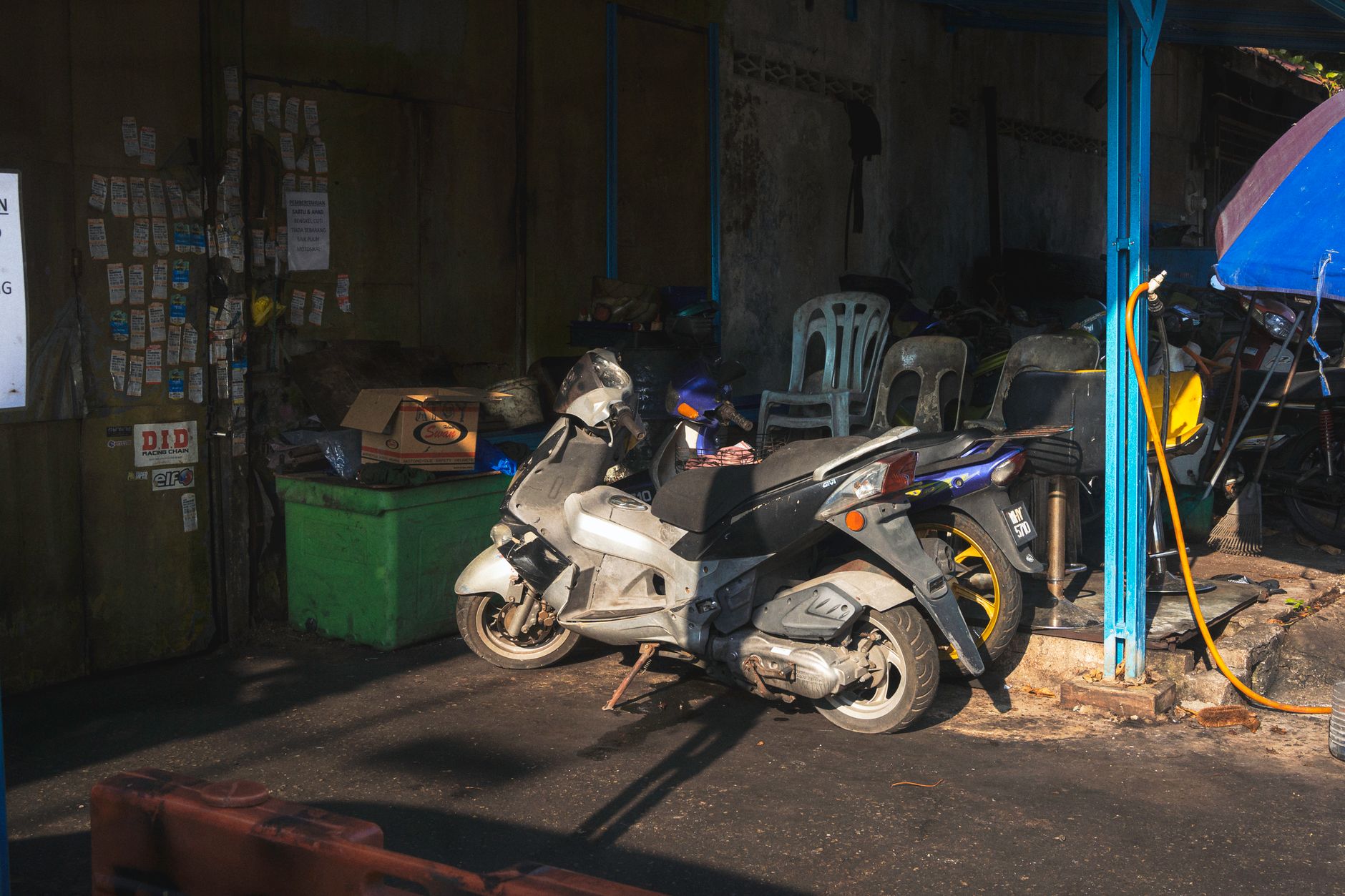
Custom Parts, Accessories, and Your Riding Gear
This is the specifically motorcycle problem. A stock comparable is not comparable to a bike with an aftermarket exhaust, upgraded suspension, a custom seat, and engine guards. Section 2695.8(b)(2) requires the comparable to carry options similar to yours and adjustments to be itemized and measurable, so a valuation that quietly prices a base model is not doing what the regulation asks. Send a line-item list (part, brand, install date, cost, receipt) with pre-crash photographs. Then read your declarations page: motorcycle policies commonly cap custom parts and equipment at a separate sublimit set by policy language, not statute.
Riding gear is routinely left out. A destroyed helmet, jacket, gloves, and boots are property you lost. Against the at-fault driver, Civil Code section 3333 measures tort damages as “the amount which will compensate for all the detriment proximately caused,” and Judicial Council of California Civil Jury Instruction CACI No. 3903J covers damage to personal property, using fair market value where an item cannot be repaired. List your gear, price it, and submit it.
First-Party, Third-Party, and Loss of Use
There are two ways the bike gets paid for. A first-party claim runs through your own collision coverage: your deductible applies, it usually moves faster, and your insurer then pursues the at-fault carrier. A third-party claim runs against the other driver’s property damage liability coverage: no deductible, but nothing moves until that carrier accepts fault. The valuation standards cross that line: section 2695.8(b)(6) states that subsection 2695.8(b) “applies to the evaluation of third-party automobile total loss claims, but does not change existing law with respect to the obligations of an insurer in settling such claims with a third party.”
Loss of use is frequently unclaimed. CACI No. 3903M tells juries that recovery requires proof of “the reasonable cost to rent a similar [item of personal property] for the amount of time reasonably necessary to repair or replace” it, which on a total loss means the replacement window. If the driver had no insurance, uninsured motorist property damage is a separate optional coverage under Insurance Code section 11580.26, capped at actual cash value or three thousand five hundred dollars ($3,500), whichever is less, and conditioned on physical contact with an identified vehicle.

The Release Is Where a Property Settlement Can Wipe Out Your Injury Claim
Read this part twice. Accepting a property damage settlement does not, by its nature, settle your bodily injury claim. They are separate elements of loss, and no California rule requires resolving them together. What ends a claim is not the label on the check; it is the document you sign. Civil Code section 1541 provides that an obligation is extinguished by a release given in writing, with or without new consideration. A signature on a broadly worded release is enough.
The sharpest edge is Civil Code section 1542: “A general release does not extend to claims that the creditor or releasing party does not know or suspect to exist in his or her favor at the time of executing the release and that, if known by him or her, would have materially affected his or her settlement with the debtor or released party.” That protects you by default, but releases routinely contain an express waiver of section 1542, and once you waive it you have given up claims you did not know you had, such as a disc or brain injury not yet diagnosed.
So before signing, check four things: whether the release is limited to property damage by its terms; whether “bodily injury,” “personal injury,” or “any and all claims” appears; whether section 1542 is waived; and whether release language is printed above the endorsement line on the back of the check. Ask in writing for a property-damage-only release covering the motorcycle and its accessories, with the injury claim expressly reserved. If you are hurt at all, have a lawyer read it first.
Claim Deadlines, and What You Can Do About a Low Offer
The claim-handling regulations impose real clocks. Title 10, section 2695.7(b) requires an insurer, upon receiving proof of claim, to “immediately, but in no event more than forty (40) calendar days later, accept or deny the claim.” Section 2695.7(c)(1) requires written notice every thirty (30) calendar days when more time is needed, and section 2695.7(h) requires payment within thirty (30) calendar days of acceptance. Put your requests in writing.
Insurance Code section 790.03(h) lists unfair claims settlement practices, but in Moradi-Shalal v. Fireman’s Fund Insurance Companies (1988) 46 Cal.3d 287 the California Supreme Court held that neither section 790.03 nor section 790.09 creates a private civil cause of action against an insurer. Against your own carrier the recognized claims are breach of the insurance contract and breach of the implied covenant of good faith and fair dealing, and you may complain to the California Department of Insurance. Against the other driver’s carrier you generally cannot sue directly until you have a judgment against its insured, which Insurance Code section 11580(b)(2) then lets you enforce against the policy.
Your two claims also run on different calendars. Code of Civil Procedure section 335.1 gives two years for an action for injury to an individual caused by another’s wrongful act or neglect. Section 338(c)(1) gives three years for “an action for taking, detaining, or injuring goods or chattels.” Never let the longer property deadline lull you about the shorter injury one.
Frequently Asked Questions
Is there a percentage that makes a motorcycle a total loss in California?
No. Vehicle Code section 544 defines a total loss salvage vehicle by whether the owner, lienholder, or insurer considers it uneconomical to repair and does not repair it. It states no threshold percentage. Insurers apply internal guidelines, but those are company standards, not California law.
Does the insurer have to pay sales tax and transfer fees on a totaled motorcycle?
Under title 10, section 2695.8(b)(1) of the California Code of Regulations, a cash settlement must be based on the actual cost of a comparable vehicle, less any deductible, including all applicable taxes and one-time fees incident to transfer of ownership, plus license and other annual fees prorated for the remaining term of the current registration. If your offer shows no tax or fee line, ask for the itemized worksheet.
Can I keep my totaled motorcycle?
Often yes, by taking a reduced settlement with salvage value deducted. Vehicle Code section 11515(b) then requires you to send the DMV the endorsed ownership document, the plates, and the fifteen dollar fee within 10 days, and the DMV issues a salvage certificate. The record is branded Salvaged, which affects resale.
Will accepting the property damage check settle my injury claim?
It should not, because property damage and bodily injury are separate elements under separate parts of the policy. But the document you sign controls. A release covering any and all claims from the crash, or one waiving Civil Code section 1542, can extinguish injury claims you have not yet discovered. Ask for one limited to the motorcycle.
How long do I have to bring a claim over my totaled motorcycle?
Two deadlines apply. Code of Civil Procedure section 335.1 gives two years for a personal injury action. Section 338(c)(1) gives three years for an action for taking, detaining, or injuring goods or chattels, the property side. Because the injury deadline is shorter, treat the two-year date as operative.
If your motorcycle was totaled and you were hurt in the same crash, the property offer is the smaller half of the problem. Our team handles the valuation dispute and the injury claim together, and reads the release before a rider signs. See our motorcycle accident attorneys, insurance claims attorneys, and catastrophic injury attorneys pages, call (888) 977-2238, or use our contact page.
This article is provided for general informational purposes only and does not constitute legal advice. Reading it does not create an attorney-client relationship. Every case is different and past results do not guarantee a similar outcome. If you have been injured, speak with a licensed attorney about your specific situation.