

Quick answer
Usually the driver leaving a parking space must yield to traffic already in the lane, and a driver in a feeder lane yields to one in the main thoroughfare. Most Vehicle Code rules do not apply on private lots, so fault rests on the general duty of ordinary care in Civil Code section 1714(a). Fault is often shared, which reduces recovery without eliminating it.
In most California parking lot collisions the driver leaving a space yields to the driver already traveling in the lane, and the driver in a feeder lane yields to the driver in a thoroughfare lane. Those are practical applications of the general duty of ordinary care under Civil Code section 1714(a) rather than Vehicle Code rules, because most of the Vehicle Code does not apply on private property unless a local authority has adopted an ordinance under Vehicle Code section 21107.8. Fault is frequently shared, and under California’s pure comparative fault rule a shared percentage reduces recovery without eliminating it.
We are B&D Injury Law Group, and our team handles injury claims across California and in Las Vegas, Nevada. Parking lot collisions look trivial and produce some of the most stubborn liability disputes we see, because there is usually no police report, no citation, and two drivers each certain the other appeared from nowhere. Below: which rules actually apply on private property, the fault patterns insurers work from, and what evidence decides these cases when nobody wrote anything down.
Why the Vehicle Code Mostly Does Not Apply
A shopping center parking lot is private property, and the Vehicle Code’s rules of the road generally govern highways rather than privately owned and maintained off-street parking facilities. That surprises people who assume a right-of-way statute settles the question.
Vehicle Code section 21107.8 provides the bridge. A city or county may adopt an ordinance or resolution declaring that privately owned and maintained off-street parking facilities are generally held open for public vehicular parking, and where it does, Vehicle Code sections 22350, 23103 and 23109 and the provisions of Division 16.5 apply to those facilities. Those cover the basic speed law, reckless driving, and speed contests respectively.
The ordinance does not apply to a particular lot unless the owner or operator posts a notice at each entrance, at least 17 by 22 inches with lettering at least one inch high, stating that the facility is subject to public moving vehicle laws and that violators may be subject to a parking invoice fee. The local authority must also hold a public hearing and give the owner and operator 10 days’ written notice before adopting the ordinance. In practice this means the answer varies by city and by lot, and the signage at the entrance is worth photographing.
Certain provisions apply regardless of location. Driving under the influence under Vehicle Code section 23152 is not limited to highways, and hit-and-run duties can attach in parking lots.
The Duty That Does Apply Everywhere
Where the Vehicle Code is silent, ordinary negligence governs, and it is not a weaker standard. Every driver owes a duty of reasonable care to everyone foreseeably affected by how they drive, and Civil Code section 1714(a) states the general principle that everyone is responsible for injury caused to another by their want of ordinary care.
Insurers commonly apply that duty through two conventions that reflect how parking lots are actually built.
The first is the distinction between thoroughfare lanes and feeder lanes. A thoroughfare is a main lane running through the lot, often connecting to the street entrance, and it functions as the through road. A feeder lane is the aisle running between rows of parked cars. A driver in a feeder lane is expected to yield to a driver in a thoroughfare.
The second is that a driver leaving a parking space yields to traffic already moving in the lane. A vehicle backing out is entering a stream of traffic from a stationary position with severely restricted visibility, and the duty sits with the driver creating that new hazard.
| Situation | Who is usually primarily at fault |
|---|---|
| Backing out of a space into a moving vehicle | The driver backing out |
| Two drivers backing out into each other | Usually shared, often close to evenly |
| Feeder lane meets thoroughfare lane | The driver in the feeder lane |
| Rear-end within a lane | The following driver, absent an unusual explanation |
| Both turning into the same space from opposite directions | Frequently shared, depending on who committed first |
| Pedestrian struck in a lot | Usually the driver, subject to the pedestrian’s own due care |
These are starting points, not rules. A driver traveling down a thoroughfare at 25 miles per hour while looking at a phone does not keep the right of way merely because the other driver was in a feeder lane.

Fault Is Usually Shared, and That Is Not Fatal
Parking lot cases produce split liability more often than roadway cases, because both drivers typically had some opportunity to avoid the collision and both were probably moving slowly enough to have done so.
California applies pure comparative fault, adopted by the Supreme Court in Li v. Yellow Cab Co. (1975). Each party’s recovery is reduced by their own percentage of responsibility, and there is no threshold at which recovery is cut off. A driver found 70 percent at fault still recovers 30 percent of their damages. This is different from most states, and it means an insurer’s assertion that you were partly to blame is an argument about percentage, not a defense to the claim.
The Property Owner Can Be a Defendant
Not every parking lot collision is only about the two drivers. Where the design or condition of the lot contributed, the owner or operator may be responsible under premises liability principles, again rooted in Civil Code section 1714(a).
The recurring issues are sightlines blocked by landscaping or stacked merchandise, faded or absent lane markings and stop legends, inadequate lighting in a structure, a poorly designed intersection of aisles, and broken pavement. Where the lot belongs to a public entity, a claim proceeds instead under Government Code section 835 for a dangerous condition of public property, and the Government Code section 911.2 six-month written claim deadline applies.
This matters most where injuries are significant and the at-fault driver carries minimum limits, because the property owner is often the only defendant with meaningful coverage.
What Actually Proves These Cases
Parking lot claims turn on evidence more than on argument, and the evidence disappears quickly.
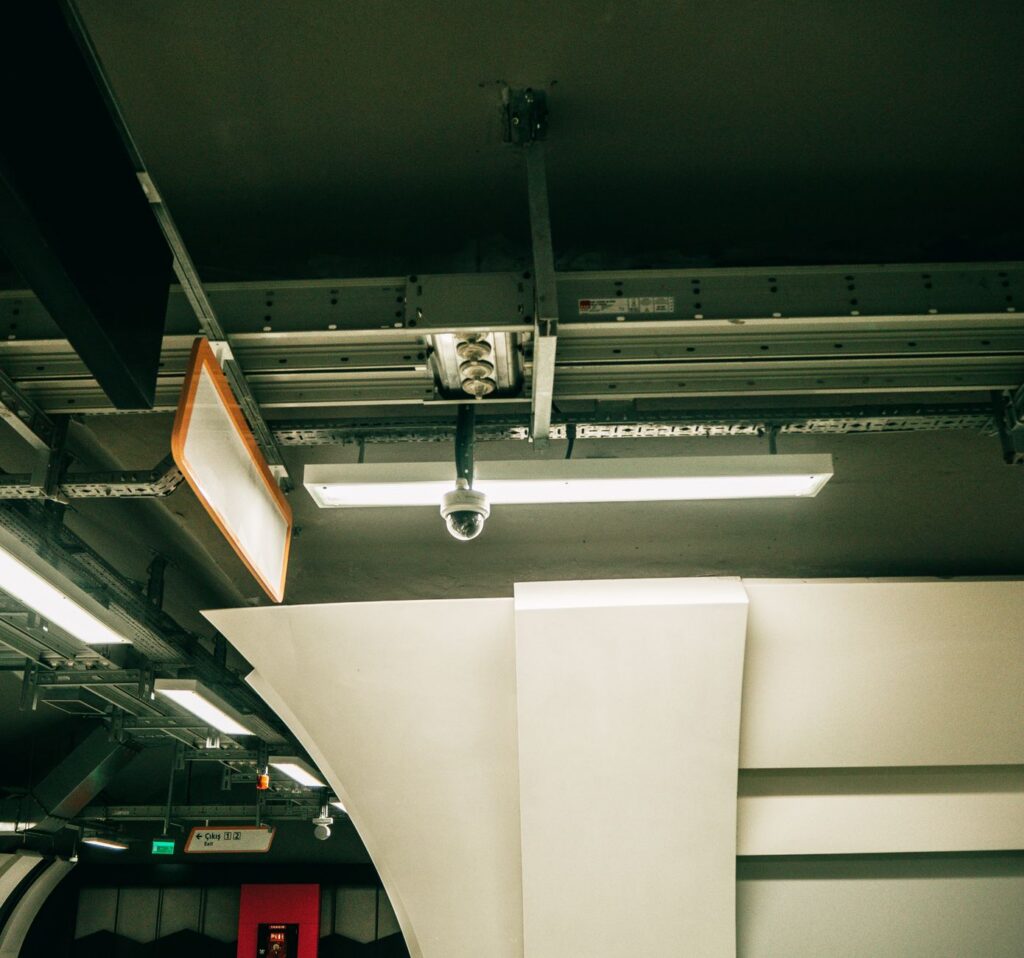
Camera footage is decisive and short-lived. Retail parking lots, parking structures and neighboring businesses commonly retain footage for somewhere between a few days and a few weeks. Ask in person the same day, identify the camera you need by position, and follow up in writing. Once it is overwritten it cannot be recovered.
Photograph the final resting positions before moving the vehicles, the damage profile on both cars, the lane markings, any stop or yield legend painted on the surface, and the signage at the lot entrance, which determines whether a section 21107.8 ordinance is in play.
Get witness contact details at the scene. Shoppers leave and cannot be traced afterwards.
Police frequently decline to respond to a private-property collision without injury, so do not treat the absence of a report as meaning the claim is unsupported. Exchange information as required, and report the incident to your own insurer promptly.
Finally, take an injury seriously even at low speed. Insurers argue causation aggressively where impact speeds were low, and a same-day medical record is worth considerably more than one created three weeks later.
Frequently Asked Questions
Who is at fault when someone backs out of a parking space and hits a passing car?
Ordinarily the driver backing out. A vehicle leaving a stationary position enters a lane of travel with limited visibility, and the duty to ensure the movement can be made safely sits with that driver. The passing driver can still bear a share of fault if they were speeding, distracted or driving the wrong way down a one-way aisle.
Does the Vehicle Code apply in a California parking lot?
Mostly not, because the rules of the road generally govern highways rather than private property. Under Vehicle Code section 21107.8 a city or county may adopt an ordinance applying sections 22350, 23103 and 23109 and Division 16.5 to privately owned off-street parking facilities, but the ordinance only applies to a lot if the owner posts a compliant sign at each entrance, at least 17 by 22 inches with one-inch lettering. Some provisions, such as DUI under section 23152, apply regardless.
Should I call the police after a parking lot accident?
It is worth requesting a response, though officers frequently decline to attend a private-property collision without injuries. If no report is taken, the absence of one does not weaken a claim. Photographs of the vehicle positions before anything moves, witness details, and nearby camera footage carry more evidentiary weight in these cases than a report generally does.
What if we were both backing out at the same time?
Fault is usually shared, often close to evenly, because both drivers owed the same duty to ensure the movement could be made safely. California’s pure comparative fault rule under Li v. Yellow Cab Co. (1975) divides responsibility by percentage, and each driver recovers the balance of their damages. Camera footage often decides which vehicle was in motion first.
Can the store or property owner be liable for a parking lot accident?
Sometimes. Where blocked sightlines, absent lane markings, inadequate lighting or broken pavement contributed, the owner or operator may be responsible under ordinary premises principles rooted in Civil Code section 1714(a). If the lot is publicly owned, the claim proceeds under Government Code section 835 and the six-month written claim deadline in Government Code section 911.2 applies.
If a parking lot collision left you injured and the insurers are blaming each other, we would like to hear what happened. Our team handles car accident claims and premises liability claims, and our Los Angeles personal injury page covers our California practice. Contact us quickly, because parking lot camera footage is often overwritten within days to a few weeks.
This article is provided for general informational purposes only and does not constitute legal advice. Reading it does not create an attorney-client relationship. Every case is different and past results do not guarantee a similar outcome. If you have been injured, speak with a licensed attorney about your specific situation.