

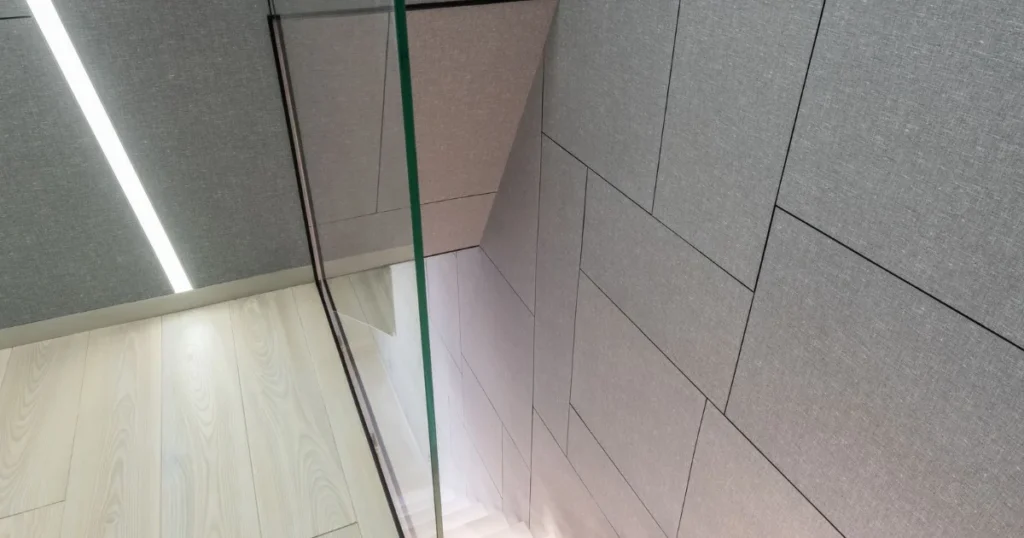
Almost everyone who falls down a flight of stairs has the same first reaction: embarrassment. You get up if you can, wave off help, and tell yourself you were clumsy. It is worth pausing on that instinct, because stairs are not a natural hazard; they are a built structure, and California law expects the people who own and control them to build, maintain, light, and repair them with reasonable care.
Sometimes a stair fall really is just a misstep. But often enough, the stairway itself failed first (a loose handrail, a riser taller than its neighbors, a burned-out light, a worn tread), and the “clumsiness” was the predictable result. Here is how to tell the difference, and what your rights look like if the stairs were the problem.
First: Get Checked Out, and Write Things Down
Stair falls produce some of the harder landings in premises cases: wrists, hips, heads, and backs take the impact, often on an edge. The CDC reports that falls are the leading cause of injury for adults 65 and older, and a fall down stairs can be serious at any age.[1] See a doctor even if you think you are fine; some injuries, especially head injuries, announce themselves late.
Then, as soon as you reasonably can: photograph the staircase from the top and the bottom, photograph whatever you believe caused the fall (the specific step, the railing, the lighting), note the date and time and lighting conditions, get names of any witnesses, and report the fall to the property owner, manager, or business (in writing if possible), and keep a copy.
Keep the shoes you were wearing, unwashed, since footwear comes up in nearly every stairway case. If you can, also photograph individual steps with a tape measure or a common object next to them for scale. Repairs after a fall are common, and photos taken that day are often the only record of the original condition.
Was It You, or Was It the Stairs?

These are the conditions that show up again and again in California stairway cases:
- A handrail that is missing, loose, broken, or ends before the stairs do
- Uneven risers or treads: steps that are not the same height or depth as the others, which the body does not expect
- Poor or burned-out lighting, especially on exterior or garage stairs
- Worn, polished, or slippery tread surfaces, and torn or loose carpet or treads
- Liquid, debris, or objects left on the steps
- Damaged or crumbling step edges
Notice what these have in common: none of them is about how careful you were. They are about the condition of the structure, which is exactly what premises liability law examines.
What You Would Have to Prove
A stair fall claim is a premises liability claim, and California’s civil jury instructions set out the four elements: the defendant owned, leased, occupied, or controlled the property; they were negligent in its use or maintenance; you were harmed; and their negligence was a substantial factor in causing that harm.[2]
The negligence element usually turns on notice. Under the jury instructions, it generally must be shown that a condition on the property created an unreasonable risk of harm, that the owner knew or through reasonable care should have known about it, and that they failed to repair it, protect against it, or give adequate warning.[3] With stairs, that showing is often stronger than in an ordinary spill case: a loose railing or an uneven riser is not a hazard that appeared thirty seconds ago. It existed, usually for a long time, and California’s constructive-notice instruction lets a jury consider whether it existed long enough to be found with reasonable care; in store and similar business cases, a failure to inspect can itself show that.[4]
For the full framework (duty, notice, and who can be held liable), see our guide to California premises liability law.
Building Codes Can Do Heavy Lifting
Stairways are one of the most heavily regulated parts of a building. Building codes address things like handrail requirements and the uniformity of risers and treads. Which code applies to a particular staircase depends on when it was built or renovated and where it is, so this article does not state any code’s specific measurements.[5]
Here is why that matters legally: under Evidence Code section 669, a person’s failure to use due care is presumed if they violated a statute, ordinance, or regulation; the violation proximately caused the injury; the injury was the kind the rule was designed to prevent; and the injured person was in the protected class.[6] A stairway that violates an applicable building code (no handrail where one is required, or risers outside the permitted variation) can put an injured person in exactly that framework. It is a presumption, not an automatic win, and it can be rebutted. But it moves the starting line, which is why stair cases often involve a code inspection early.
Who Might Be Responsible
A business is typically responsible for the stairs inside the space it controls, and for inspecting them. Our post on what happens after a slip and fall in a store covers that setting.
A landlord is generally responsible for unsafe conditions it knew about or should have found through a reasonable inspection when the lease began, and, most relevant here, for the common areas it still controls, which is precisely where apartment stairwells live. The jury instructions require a landlord to make reasonable periodic inspections of property it has the right to possess, and to guard against unsafe conditions it knows or should know about in areas it controls.[7]
Stairs inside your own unit follow a narrower rule. Under the landlord-duty jury instruction (CACI No. 1006), a landlord is generally responsible for a condition in an area the tenant controls only if it actually knew about the condition and had the right and ability to fix it. That is why a written repair request about a loose railing or a broken step is such valuable evidence: it turns an argument about what the landlord should have known into a record of what it did know.
Responsibility also follows control, not just ownership. In Alcaraz v. Vece (1997) 14 Cal.4th 1149, the California Supreme Court recognized that duties tied to the condition of property are owed by whoever possesses and controls it, so a property manager or a commercial tenant that maintains a stairway can be a proper defendant.
A public entity (for stairs at a courthouse, a park, or a transit station) can be liable for a dangerous condition of public property under Government Code section 835, but the deadline is far shorter: a written claim generally must be presented within six months.[8]
A venue or attraction operator (stairs and walkways at a stadium, theater, or theme park) answers for the areas it controls and for how it manages crowds on them. Our guide to injuries at amusement parks and attractions covers that setting.
What If They Say It Was Your Fault?
Expect it. You were not holding the handrail. You were looking at your phone. You were wearing the wrong shoes. Some of that may even be partly true, and in California, it still does not end your claim. Under the pure comparative negligence rule adopted in Li v. Yellow Cab Co., being partly at fault reduces your recovery in proportion to your share of responsibility rather than eliminating it.[9] Our guide to comparative negligence in California explains how apportionment works.
The Deadlines
Most California personal injury claims, including stair falls on private property, must be filed within two years of the injury.[10] Falls on public property follow a shorter, two-step track: the written claim generally must be presented within six months of the fall (Government Code section 911.2), and if the entity rejects it, the lawsuit generally must be filed within six months of the rejection notice (section 945.6). The ordinary two-year deadline does not rescue a timely claim followed by a late lawsuit.[8] The deadline may be paused for injured minors.[11] And as a practical matter, stairway evidence disappears: railings get fixed, lighting gets replaced, and camera footage gets overwritten, usually within days. Our guide to how long you have to file a personal injury claim in California covers the exceptions.
Frequently Asked Questions
Can you sue for falling down stairs in California?
Yes, when the fall was caused by a dangerous condition the owner knew about or should have discovered (a defective railing, uneven steps, poor lighting, or a hazard left on the stairs) and the other elements of a premises liability claim are met. A fall alone, without a dangerous condition, generally is not enough.[2][3]
What if nobody saw me fall?
Many stair falls have no witnesses, and claims still succeed. The condition of the staircase is its own evidence: photographs, inspection and maintenance records, prior complaints, building-code measurements, and your prompt medical records all speak even when no one was watching.
What if I fell down the stairs at work?
Work injuries generally go through California’s workers’ compensation system rather than a lawsuit against your employer. But if someone other than your employer was responsible for the stairs (a building owner, a property manager, a contractor), a separate claim against that third party may exist alongside the workers’ compensation claim.[12]
What if I fell on the stairs at my apartment building?
Apartment stairwells are usually common areas the landlord still controls, and California law expects landlords to inspect and maintain those areas. A fall caused by a broken railing or failed lighting in a common stairwell is one of the classic landlord liability cases.[7]
How long do I have to bring a claim?
Generally two years from the injury for claims against private owners, and generally a six-month government claim first when public property is involved. Deadlines can be changed by facts specific to your case, so have your dates checked early.[8][10]
Talk It Through Before the Evidence Disappears
If you fell down stairs on someone else’s property in Los Angeles or anywhere in Southern California and something about that staircase was not right, it costs nothing to ask the question. Bring your photos and your medical records, and our team will tell you honestly whether the condition of the stairs supports a claim. Our practice handles California premises liability claims, consultations are free, and there is no obligation.
Sources and Notes
[1] CDC, Older Adult Falls Data: “Falls are the leading cause of injury for adults ages 65 years and older.” Limiting note: the CDC statistic describes older adults; it is cited for the seriousness of falls generally, not as a claim about any reader’s injury.
[2] CACI No. 1000 (premises liability essential elements: ownership/lease/occupancy/control; negligence in use or maintenance; harm; substantial factor).
[3] CACI No. 1003 (a condition creating unreasonable risk; the defendant knew or through the exercise of reasonable care should have known of it; failure to repair, protect against, or give adequate warning).
[4] CACI No. 1011 (constructive notice: whether the condition was of such a nature and existed long enough to be discovered through reasonable care; if no inspection was made within a reasonable time before the accident, that may show the condition existed long enough that an owner using reasonable care would have discovered it).
[5] This article deliberately states no building-code measurement, dimension, or requirement. Which edition of which code applies to a given staircase depends on the building’s construction and renovation dates and its jurisdiction, and stating a single rule here would be wrong for many staircases.
[6] Cal. Evid. Code § 669(a) (negligence presumed where a statute, ordinance, or regulation of a public entity was violated; the violation proximately caused death or injury; the harm resulted from an occurrence of the nature the enactment was designed to prevent; and the injured person was in the protected class). Limiting note: § 669(b) provides for rebuttal; this is a presumption affecting the burden of proof, not a finding of liability.
[7] CACI No. 1006 (a landlord must conduct a reasonable inspection for unsafe conditions before giving possession, and must conduct reasonable periodic inspections of rental property whenever it has the legal right of possession; the pre-possession inspection must include common areas under its control).
[8] Cal. Gov. Code § 835 (liability for a dangerous condition of public property, with its own proof elements and statutory immunities) and Cal. Gov. Code § 911.2 (claim for injury generally must be presented not later than six months after accrual). Limiting note: presenting a claim is a separate step from filing suit, and the scheme carries additional deadlines.
[9] Li v. Yellow Cab Co. (1975) 13 Cal.3d 804 (adopting pure comparative negligence). Limiting note: apportionment is a question of fact in each case; this article states no figure or typical split.
[10] Cal. Code Civ. Proc. § 335.1 (two years for an action for injury to, or death of, an individual caused by the wrongful act or neglect of another). Limiting note: the general rule only; accrual can be delayed, the period can be tolled, and shorter deadlines apply to public-entity claims; confirm your own dates with an attorney.
[11] Cal. Code Civ. Proc. § 352(a) (tolling during minority). Limiting note: tolling rules are fact-specific and interact with the public-entity claim scheme differently.
[12] California workers’ compensation is generally the exclusive remedy against an employer for injuries arising out of and in the course of employment (see Lab. Code § 3602), subject to statutory exceptions; third-party claims are a separate question. This article does not state a rule for any particular workplace injury.
Required Disclosures
Responsible for this content: B&D Law Group, APLC.
Office location: B&D Law Group, APLC maintains an office in Los Angeles, California.
Attorney advertising. This article is general information about California law and is not legal advice. Reading it, or contacting B&D Law Group, APLC through this website, does not create an attorney-client relationship. Every case depends on its own facts. Results will differ based on different facts, past results do not guarantee a similar outcome, and no result is guaranteed.
Related Reading
- California Premises Liability Law: Who Is Responsible When You’re Hurt on Someone Else’s Property?
- Is It Illegal to Switch Lanes in an Intersection in California?
- California Bike Lane Laws: Who Belongs in a Bike Lane, and When
- What Happens If You Slip and Fall in a Store? Your Rights in California
- Premises Liability Attorneys — B&D Law Group