

Quick answer
Under Vehicle Code 21209, a driver may enter a California bike lane only to park where parking is allowed, to enter or leave the roadway, or to set up a turn within 200 feet of an intersection. Cyclists moving slower than traffic must use an available bike lane (Vehicle Code 21208) except when passing, preparing a left turn, avoiding a hazard, or approaching a right turn. Class II lanes are defined to permit parking where it is otherwise allowed, while Vehicle Code 21211 bars parking on a Class I path when it blocks bicyclists.
If you ride a bike in California, you have probably had the same three arguments in your head: Do I have to be in this lane? Is that car allowed to be here? Can they really park in front of me like that?
The answers are in state law, and they are more specific than most people expect.
First: Not Every Bike Marking Is a “Bike Lane”
California sorts bike infrastructure into four classes, and the class changes which rules apply.
A Class I bikeway (a bike path) is a completely separate right-of-way for the exclusive use of bicycles and pedestrians. A Class II bikeway is the striped lane painted on a regular street: motor vehicles may not travel through it, but parking and crossing traffic are still permitted. A Class III bikeway is a signed bike route shared with cars and pedestrians. A Class IV bikeway, or cycle track, is bicycles-only and physically separated from traffic by posts, barriers, grade changes, or parked cars.[1]
That distinction is the piece most guides skip, and it matters: a rule that protects a bike path does not automatically protect a striped bike lane.
Bike lanes on most local streets are put there by cities and counties, which state law expressly allows.[2]
Do You Have to Ride in the Bike Lane?
Usually yes, but with real exceptions.
If a bike lane has been established on the roadway and you are riding slower than the normal speed of traffic going your direction, California law says you have to ride within it.[3] The statute then lists four situations where you may leave:
- Passing another bicycle, vehicle, or pedestrian, when it cannot be done safely inside the lane.
- Preparing for a left turn at an intersection, or into a private road or driveway.
- When reasonably necessary to avoid debris or other hazardous conditions.
- When approaching a place where a right turn is authorized.
One condition applies on the way out: you may not leave until the move can be made with reasonable safety, and you must signal first if any vehicle could be affected.[3]
That “debris or other hazardous conditions” exception does a lot of work. Broken glass, a sunken drain grate, a construction plate, a door swinging open: the law does not require you to ride into a hazard to stay inside a painted line.
More broadly, a person riding a bicycle on a highway in California has the rights of a driver and is subject to the same rules of the road, except where a rule cannot sensibly apply to a bicycle.[4] For helmets, lighting, sidewalks, and e-bikes, see our fuller guide to California bicycle laws.
When Is a Car Allowed to Be in a Bike Lane?
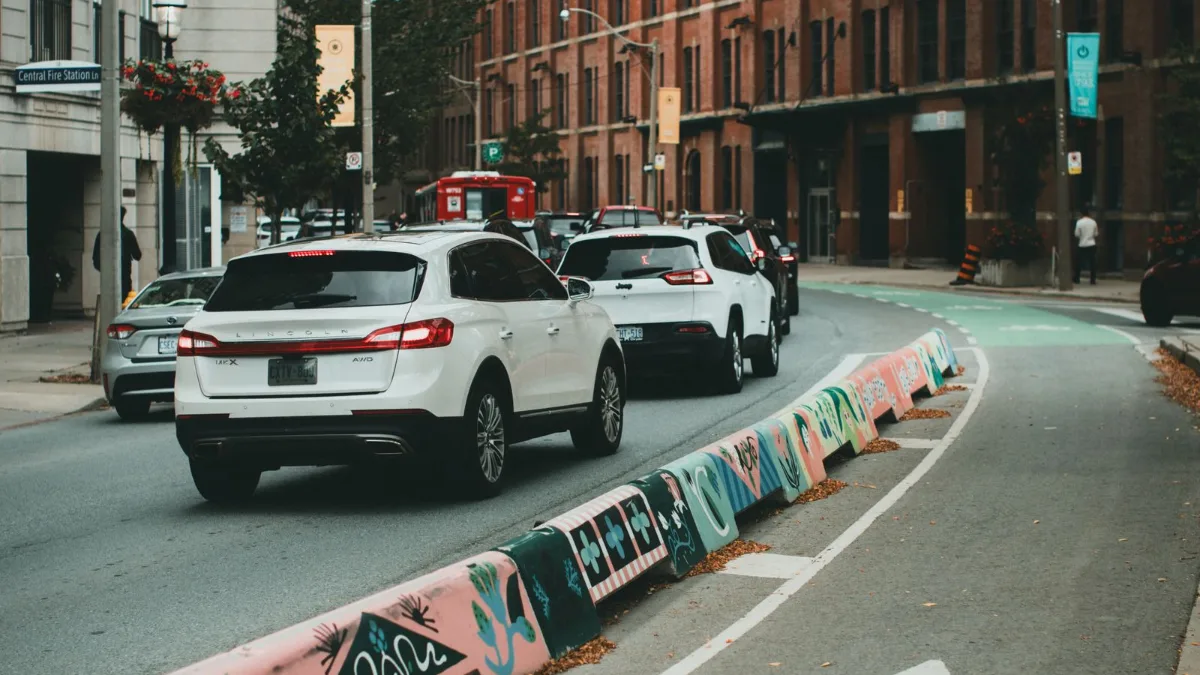
The answer is narrower than driver behavior suggests. California law says no person shall drive a motor vehicle in a bike lane established on a roadway, with three exceptions. A driver may be in the lane to park where parking is permitted, to enter or leave the roadway, or to prepare for a turn within 200 feet of an intersection.[5]
That last exception is the one drivers lean on, and it has a hard edge: 200 feet, and only when actually preparing for a turn. Merging in a quarter mile early to skip a queue is not what the statute describes. Neither is using the bike lane as a travel lane, a passing lane, or a place to idle.
Can a Car Park in a Bike Lane?
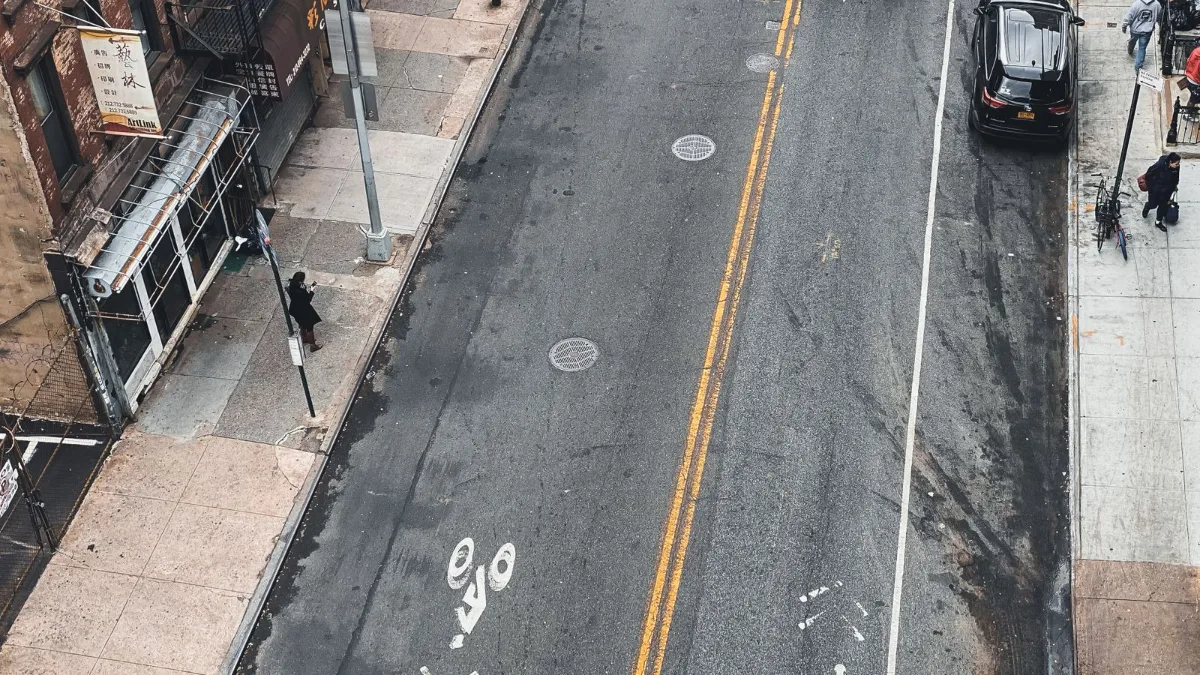
The honest answer is: it depends, and anyone who tells you it is always illegal is oversimplifying.
Class II bike lanes are defined in a way that expressly permits vehicle parking.[1] And the driving prohibition itself carves out parking “where parking is permitted.”[5] So whether a car may legally sit in a particular bike lane usually turns on local signage, curb markings, and municipal ordinance rather than one statewide rule.
Bike paths are treated differently. State law bars stopping, standing, sitting, or loitering on a Class I bikeway or other bicycle path or trail when it impedes normal bicycle movement, and separately bars parking a vehicle or object on one in a way that blocks bicyclists, with exceptions for certain utility, delivery, refuse, and tow vehicles.[6]
One newer rule touches bike lanes indirectly. California now bars parking within 20 feet of the approach side of any crosswalk, or 15 feet where a curb extension is present, known as the “daylighting” rule.[7]
Car Doors, Passing Distance, and the Space You Are Owed
Two rules do most of the protective work for riders in a bike lane.
Doors. No one may open a vehicle door on the traffic side unless it is reasonably safe and can be done without interfering with moving traffic, or leave it open longer than necessary to load or unload.[8] Where a bike lane runs alongside parallel parking, this is the rule that governs a ‘dooring’. Our guide to dooring accidents in California covers what to do if it happens to you.
Passing. Under the Three Feet for Safety Act, a driver may not pass a bicycle traveling the same direction at a distance of less than three feet. Where another lane is available and the move can be made safely, the driver is to change lanes before passing. Where three feet is not possible, the driver must slow to a reasonable and prudent speed and may pass only when doing so would not endanger the rider. A violation is an infraction.[9]
If You Were Hurt Riding in a Bike Lane
The timelines are unforgiving, so a few things are worth knowing early.
Most California personal injury claims must be filed within two years of the injury.[10] But two years is a starting point, not a promise; deadlines can be shortened, paused, or moved by facts specific to your case, so have someone look at your dates early.
If the problem was the roadway itself (a bike lane that dead-ends into traffic, a grate that swallows a wheel, a lane never repainted after resurfacing), you may be looking at a claim against a city, county, or the state. That follows a much shorter track: a claim for personal injury or death against a public entity generally must be presented within six months after the cause of action accrues.[11] These claims also carry their own proof requirements for a dangerous condition of public property, which the footnote sets out.[12]
If an insurer suggests you were partly to blame for leaving the lane, being partly at fault in California does not by itself end a claim; it is handled through comparative negligence. Our guide to how long you have to file a personal injury claim in California goes deeper on timing.
Frequently Asked Questions
Is it illegal to drive in a bike lane in California?
Generally yes, on a bike lane established on a roadway, except to park where parking is permitted, to enter or leave the roadway, or to prepare for a turn within 200 feet of an intersection.[5]
Are bike lanes mandatory for cyclists in California?
If a bike lane has been established and you are riding slower than the normal flow of traffic, you must ride in it, subject to four exceptions: passing, preparing for a left turn, avoiding debris or hazards, and approaching an authorized right turn.[3]
Can cars park in a bike lane in California?
Sometimes. Class II bike lanes are defined to permit vehicle parking, and the driving prohibition allows parking “where parking is permitted,” so it usually comes down to local signs and ordinances. Class I bikeways and bike paths are protected by a separate rule against blocking them.[1][5][6]
How close can a car pass me in a bike lane?
No closer than three feet. Where another lane is available and it is safe, the driver is to change lanes to pass; where three feet is not possible, the driver must slow and may pass only without endangering the rider.[9]
Talk It Through With Someone
If you were hit while riding (in a bike lane, leaving one, or because a car was somewhere it should not have been), you can ask questions before deciding anything. Our practice handles California bicycle and roadway injury claims, and a first conversation costs nothing. Reach us here whenever you are ready. No pressure, no obligation.
Sources and Notes
[1] Cal. Streets & Highways Code § 890.4 (bikeway classifications). Limiting note: § 890.4(b) describes Class II bikeways as permitting vehicle parking and crossflows by pedestrians and motorists. This is a definitional provision: it describes what a Class II lane is, and does not itself authorize parking at any particular location. Whether parking is lawful in a specific bike lane depends on local signage and ordinance.
[2] Cal. Veh. Code § 21207 (local authorities may establish bicycle lanes by ordinance or resolution, other than on state highways and certain county highways).
[3] Cal. Veh. Code § 21208. Limiting note: the duty in subdivision (a) applies only where a bike lane has been established under § 21207 and the rider is traveling slower than the normal speed of traffic in the same direction. It does not apply to Class III routes, and it is not a general requirement to use every marked bicycle facility.
[4] Cal. Veh. Code § 21200(a).
[5] Cal. Veh. Code § 21209(a) (no driving a motor vehicle in an established bike lane except to park where permitted, to enter or leave the roadway, or to prepare for a turn within 200 feet of the intersection). Limiting note: subdivision (b) separately permits motorized bicycles in bike lanes at reasonable speeds operated without endangering bicyclists.
[6] Cal. Veh. Code § 21211. Important limiting note: subdivision (a) is keyed to Class I bikeways, as defined in Streets & Highways Code § 890.4(a), and other public or private bicycle paths or trails, and applies only where the conduct impedes or blocks the normal and reasonable movement of a bicyclist. Subdivisions (c)–(f) exempt specified utility, newspaper delivery, refuse collection, and tow vehicles under stated conditions. This section should not be cited as a general ban on blocking a striped Class II bike lane.
[7] Cal. Veh. Code § 22500(n)(1)(A) (no stopping or parking within 20 feet of the vehicle approach side of any marked or unmarked crosswalk, or within 15 feet of any crosswalk where a curb extension is present); § 22500(n)(3) allows a local authority to permit bicycle or motorized scooter parking within that 20 feet. Limiting note: this is a crosswalk-setback rule, not a bike lane rule. It is included because it changes parking near many intersections where bike lanes run.
[8] Cal. Veh. Code § 22517.
[9] Cal. Veh. Code § 21760 (Three Feet for Safety Act). Limiting note: the three-foot distance in subdivision (c) and the slow-and-pass rule in subdivision (d) are qualified by conditions including traffic, weather, visibility, and roadway width; the lane-change duty applies where a lane is available and the change is practicable and not prohibited by law. Violation is an infraction under subdivision (e). Fine amounts are deliberately omitted from the body copy.
[10] Cal. Code Civ. Proc. § 335.1 (two years for an action for injury to, or death of, an individual caused by the wrongful act or neglect of another). Limiting note: two years is the general rule only. Accrual can be delayed, the period can be tolled, and shorter deadlines apply to claims against public entities and to certain defendants. The variables (including the injured person’s age or incapacity, when the injury was or reasonably should have been discovered, and the identity of the defendant) are fact-specific. This post does not state a rule for any individual reader; anyone with a potential claim should have their own attorney review their actual dates.
[11] Cal. Gov. Code § 911.2(a) (claim relating to a cause of action for death or for injury to person or to personal property must be presented not later than six months after accrual; other claims within one year). Limiting note: presenting a claim is a separate step from filing a lawsuit, and § 911.2 is one part of a multi-step statutory scheme with its own deadlines for late-claim applications and for suit after rejection. Which public entity must be served, and when the cause of action accrued, are both fact-specific.
[12] Cal. Gov. Code § 835 (public entity liability for dangerous condition of public property): the plaintiff must establish that the property was in a dangerous condition at the time of the injury, that the injury was proximately caused by the dangerous condition, that the condition created a reasonably foreseeable risk of the kind of injury incurred, and either that a public employee’s negligent or wrongful act within the scope of employment created the condition, or that the entity had actual or constructive notice of it under § 835.2 a sufficient time before the injury to have taken protective measures. Limiting note: § 835 opens “Except as provided by statute,” and a number of statutory immunities, including design immunity for construction or improvement carried out under approved plans (Gov. Code § 830.6), can defeat a claim that otherwise meets these elements.
Related Reading
- Moped Laws in California: Which Motorized Devices May Use a Bike Lane
- California electric scooter laws and the Class II bikeway rule
- California Bicycle Laws: The Complete Guide for Cyclists (2026)
- Bicycle Accident Attorneys — B&D Law Group
Required Disclosures
Responsible for this content: B&D Law Group, APLC.
Office location: B&D Law Group, APLC maintains an office in Los Angeles, California.
Attorney advertising. This article is general information about California law and is not legal advice. Reading it, or contacting B&D Law Group, APLC through this website, does not create an attorney-client relationship. Every case depends on its own facts. Results will differ based on different facts, past results do not guarantee a similar outcome, and no result is guaranteed.