

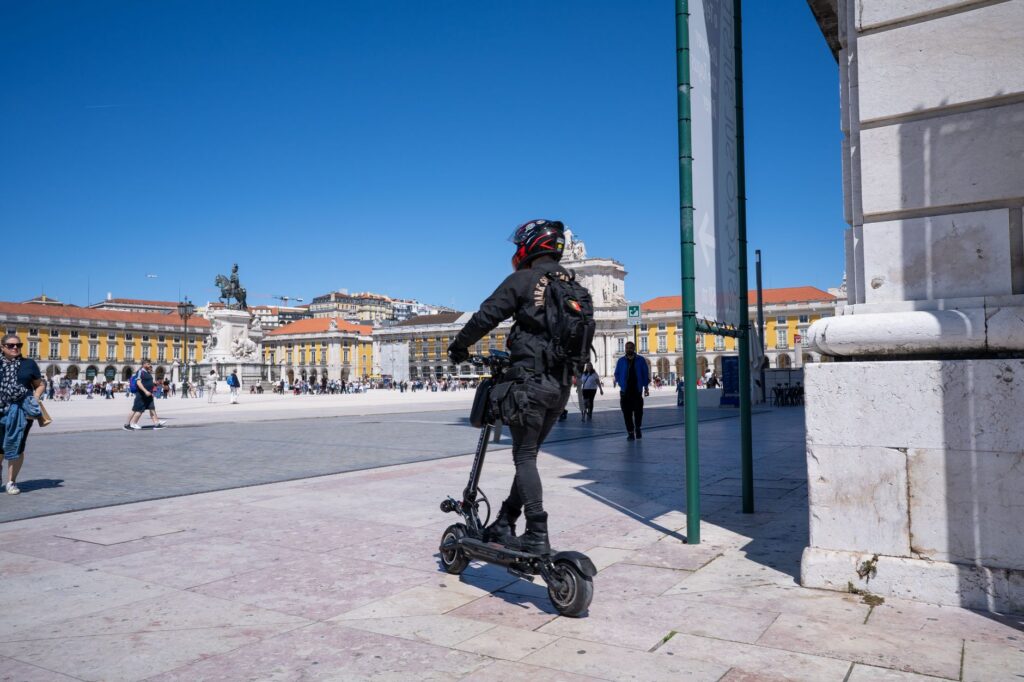
California treats an electric scooter as a motorized scooter under Vehicle Code section 407.5, and Vehicle Code section 21235 sets the rules for riding one. A rider must hold a valid driver’s license or instruction permit, must not exceed 15 miles per hour under Vehicle Code section 22411 no matter what the posted limit is, must wear a helmet if under 18, must not carry a passenger, and must stay off sidewalks except to enter or leave adjacent property. On a road posted above 25 miles per hour a scooter must be in a Class II or Class IV bikeway, unless a local ordinance permits otherwise on roads posted up to 35.
We are B&D Injury Law Group, and our team handles injury claims across California and in Las Vegas, Nevada. Scooter crashes reach us in a predictable shape: a rider is hurt, a driver says the scooter came out of nowhere, and someone has already suggested the rider broke a rule and therefore has no claim. That is not how California fault works. Below: what the statute actually requires, what happens when a rider breaks one of these rules and is hurt anyway, and who can be responsible besides the driver.
What Vehicle Code Section 21235 Requires
Section 21235 is written as a list of things the operator of a motorized scooter shall not do, which makes it easy to misread. Turned into plain requirements, it says the following.
The scooter must have a brake capable of making a braked wheel skid on dry, level, clean pavement. The rider must hold a valid driver’s license or instruction permit. A rider under 18 must wear a properly fitted and fastened bicycle helmet meeting the standards in Vehicle Code section 21212. The rider may not carry a passenger, may not carry anything preventing at least one hand on the handlebars, and may not ride a scooter whose handlebars are raised so high that the rider must elevate their hands above their shoulders.
Sidewalk riding is prohibited except to enter or leave adjacent property. Parking is prohibited where it blocks a pedestrian path. Attaching the scooter to another vehicle on the roadway is prohibited.
| Rule | What the statute says |
|---|---|
| Speed | 15 mph maximum under CVC 22411, on all highways including bikeways, regardless of the posted limit |
| Licence | Valid driver’s license or instruction permit required |
| Helmet | Required under 18, meeting the CVC 21212 standard |
| Sidewalks | Prohibited except to enter or leave adjacent property |
| Passengers | Not permitted |
| Roads over 25 mph | Must ride in a Class II or Class IV bikeway, unless a local ordinance allows otherwise up to 35 mph |
The Speed Rule People Get Wrong
Subdivision (b) of section 21235 does two separate things, and riders routinely conflate them.
First, it restricts where a scooter may go on faster roads. A rider may not operate a motorized scooter on a highway with a speed limit above 25 miles per hour unless the scooter is within a Class II or Class IV bikeway. A local authority may adopt an ordinance authorizing scooter operation outside those bikeways on roads posted up to 35 miles per hour, which is why the answer differs between neighboring cities.
Second, and independently, it confirms that the 15 mile per hour maximum in Vehicle Code section 22411 “applies to the operation of a motorized scooter on all highways, including bikeways, regardless of a higher speed limit applicable to the highway.” A rider in a bike lane on a 45 mile per hour arterial is still limited to 15.
Breaking a Scooter Rule Does Not End the Claim
This is the part that matters most after a crash. California does not bar recovery because an injured person was violating a traffic law. Under the pure comparative fault rule adopted in Li v. Yellow Cab Co. (1975), a rider’s own negligence reduces their damages by their percentage of responsibility and nothing more. A rider found 40 percent at fault for riding on a sidewalk still recovers 60 percent.
A statutory violation does have evidentiary force. Where a rider violated a safety statute and the violation caused the kind of harm the statute was designed to prevent, a defendant can argue negligence per se, which shifts the burden on the negligence element. But it establishes a share of fault, not a defense to the whole case, and it does not answer the separate question of what the driver did.
There is also a live factual question in most of these cases about whether the violation caused anything. A rider without a license who is struck from behind by a driver looking at a phone did not cause that collision by lacking a license. Adjusters raise the violation because it is easy to prove and uncomfortable to answer, not because it resolves liability.
Who Can Be Responsible Besides the Driver
Scooter cases often have more than one defendant, and identifying them early matters because the deadlines differ.
The driver of the motor vehicle is the usual starting point, under ordinary negligence principles and the right-of-way rules in Vehicle Code sections 21800 through 21804.
A property owner can be responsible where the crash involved a hazard on private premises. Civil Code section 1714(a) makes everyone responsible for injury caused to another by their want of ordinary care in the management of their property.
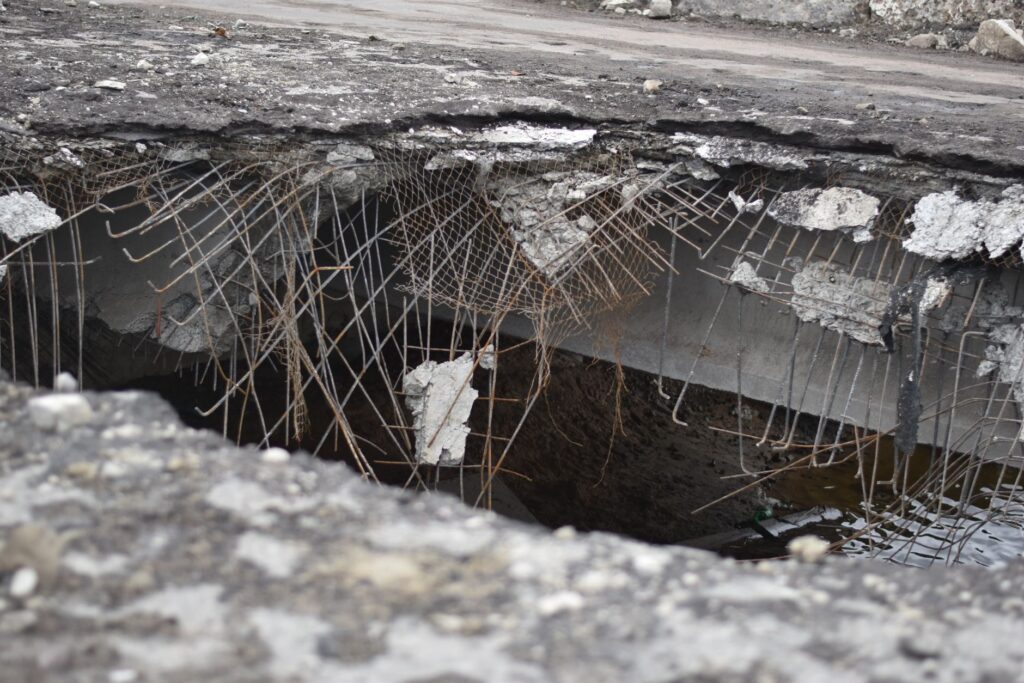
A public entity can be responsible for a dangerous condition of public property under Government Code section 835, which requires proof that the property was in a dangerous condition at the time of injury, that the condition created a reasonably foreseeable risk of the kind of injury that occurred, and either that a public employee’s negligent act created it or that the entity had actual or constructive notice in time to have protected against it. Broken pavement, an unmarked drop-off, and a missing grate are the recurring fact patterns. Claims against a public entity carry the six-month written claim requirement in Government Code section 911.2, which is far shorter than the two-year deadline most people assume applies.
The scooter itself can be the defect. A brake that fails or a stem that separates is a product liability claim, governed in California by the strict liability rule adopted in Greenman v. Yuba Power Products (1963), which does not require proof that the manufacturer was careless.
Rental operators occupy contested ground. Their user agreements contain arbitration clauses and liability waivers whose enforceability depends on the specific language, the circumstances of acceptance, and the nature of the conduct alleged. Whether a particular waiver holds up is fact-specific and worth having reviewed rather than assumed in either direction.
What Preserves a Scooter Claim
Scooter cases lose their evidence faster than car cases do. There is often no police report, no exchange of insurance, and no vehicle left at the scene to photograph.
Photograph the scooter, the roadway surface, the lane markings and the vehicle positions before anything moves. If it is a rental, record the scooter’s identification number and screenshot the trip in the app, because ride records get purged. Get names and numbers from witnesses at the scene, since a scooter rider on the ground rarely has a way to find them later. Report the crash to police even where no one insists on it, and seek medical attention the same day, because a gap of even a week becomes the centerpiece of the insurer’s causation argument.
Preserve the scooter itself if it was privately owned and a component failed. Once it goes in a dumpster, the product claim generally goes with it.
Frequently Asked Questions
Do you need a driver’s license to ride an electric scooter in California?
Yes. Vehicle Code section 21235 prohibits operating a motorized scooter without a valid driver’s license or instruction permit. The requirement applies regardless of whether the scooter is rented or owned.
How fast can an electric scooter legally go in California?
Fifteen miles per hour. Vehicle Code section 22411 sets that maximum, and section 21235(b) confirms it applies on all highways including bikeways, regardless of a higher posted speed limit on the road. Separately, a scooter may not be ridden on a road posted above 25 miles per hour unless it is in a Class II or Class IV bikeway, though a local ordinance may authorize operation outside those bikeways on roads posted up to 35.
Is it legal to ride an electric scooter on the sidewalk in California?
No, with one narrow exception. Section 21235 prohibits operating a motorized scooter on a sidewalk except when entering or leaving adjacent property. It also prohibits parking a scooter on a sidewalk in a position that blocks a pedestrian path.
Do adults have to wear a helmet on an electric scooter in California?
Not under state law. The helmet requirement in section 21235(c) applies to operators under 18 and requires a properly fitted and fastened bicycle helmet meeting the standards described in Vehicle Code section 21212. Riders 18 and over are not required by the Vehicle Code to wear one, though a defendant may still raise the absence of a helmet on the question of what damages the crash actually caused.
Can I still recover if I broke a scooter law when I was hit?
Generally yes. California follows pure comparative fault under Li v. Yellow Cab Co. (1975), so a rider’s own violation reduces recovery by their percentage of responsibility rather than barring it. A violation can support a negligence per se argument where it caused the type of harm the statute was meant to prevent, but that establishes a share of fault, not a defense to the entire claim.
If you were hurt on a scooter, or a driver has told their insurer you came out of nowhere, we would like to hear what happened. Our team handles pedestrian and vulnerable road user claims, premises liability claims and product liability claims. Keep the scooter, and contact us before giving a recorded statement.
This article is provided for general informational purposes only and does not constitute legal advice. Reading it does not create an attorney-client relationship. Every case is different and past results do not guarantee a similar outcome. If you have been injured, speak with a licensed attorney about your specific situation.