


There is no single California leash law governing ordinary streets and sidewalks. The state code restrains dogs in only a few narrow situations (puppies under four months, female dogs in heat, and animals riding in an open truck bed) and leaves the everyday leash rule to counties and cities. Whether a dog had to be leashed where you were standing depends on the ordinance at that address.
B&D Law Group, APLC represents people injured by dogs across California, and we field this question constantly after an off-leash attack. The leash rule matters not because a citation pays your bills, but because the ordinance where you were hurt often decides which liability theory carries your case. Below: the layered structure, what real ordinances say, and the distinction that decides most claims: bites are strict liability, everything else is negligence.
Is There a Statewide California Leash Law?
No. California regulates dogs by delegation. Health and Safety Code section 121690 directs each city, city and county, or county to maintain a rabies control program, and provides that a dog violating that chapter “or any additional provisions that may be prescribed by a local governing body shall be impounded, as provided by local ordinance.” The statute assumes local bodies will write the operative rules.
Food and Agricultural Code section 31683 is blunter: nothing in that chapter prevents a city or county from adopting its own program for controlling dangerous dogs, including a “more restrictive program.” So the question “what is the California leash law” always carries a follow-up: where were you?
The State Restraint Rules That Do Exist
Three provisions restrain dogs directly, statewide. Health and Safety Code section 121690(c) requires that “all dogs under four months of age shall be confined to the premises of, or kept under physical restraint by, the owner, keeper, or harborer.” Food and Agricultural Code section 30954 makes it unlawful to let a female dog you own or control run at large while she is in heat. And Vehicle Code section 23117(a) bars carrying an animal in a vehicle’s open load space on a highway unless the space is enclosed, has racks at least 46 inches high, or the animal is secured. Food and Agricultural Code sections 31602 and 31603 also define a “potentially dangerous dog” and a “vicious dog,” but those are post-hearing designations, not leash rules.

Local Leash Ordinances: What They Actually Say
In unincorporated Los Angeles County, section 10.32.010 prohibits dogs running at large. County Animal Care and Control describes the requirement as restraining a dog “on a substantial leash not exceeding six feet in length by a person capable of controlling the dog while on public property or common areas of private property.” The City of Los Angeles has its own rules: Municipal Code section 53.06 bars allowing an animal to be “at large in or upon any public street, sidewalk or park,” and section 53.06.2 requires a “substantial chain or leash not exceeding six feet in length” off the owner’s premises.
San Francisco draws the line elsewhere. The San Francisco Police Department’s General Order 6.07 identifies Health Code section 41.12(a) as the city’s leash law and describes the restraint as a leash, rope, or chain of no more than eight feet.
| Jurisdiction | Provision | Leash limit |
|---|---|---|
| Los Angeles County (unincorporated) | L.A. County Code § 10.32.010 | Substantial leash not exceeding 6 feet, competent person in control |
| City of Los Angeles | L.A. Mun. Code §§ 53.06, 53.06.2 | Substantial chain or leash not exceeding 6 feet |
| City and County of San Francisco | S.F. Health Code § 41.12(a) | Leash, rope, or chain not more than 8 feet |
Ordinances get amended, so the version that matters is the one in force on your incident date. And land that looks public is not always the city’s: parks, beaches, and federal recreation areas set their own rules.
Civil Code Section 3342: Strict Liability Is About Bites
Civil Code section 3342(a) provides that “the owner of any dog is liable for the damages suffered by any person who is bitten by the dog while in a public place or lawfully in a private place, including the property of the owner of the dog, regardless of the former viciousness of the dog or the owner’s knowledge of such viciousness.”
You need not prove the owner was careless, that the dog had bitten before (California has no “one free bite” rule), or that the dog was off leash at all. A leashed dog that bites a lawful visitor on its owner’s porch is covered.
The main carve-out is in subdivisions (b) through (d), exempting a governmental agency using a dog in military or police work when the bite occurred while the dog was defending itself from provocation or assisting an employee in apprehending a suspect, investigating a crime, executing a warrant, or defending an officer or another person, but only where the person bitten was a party to or suspected of participating in the acts that prompted the dog’s use, and only if the agency adopted a written policy on its necessary and appropriate use.
What counts as a “bite” is broad. In Johnson v. McMahan (1998) 68 Cal.App.4th 173, the Court of Appeal held that “bite” in section 3342 ‘does not require a puncture or tearing away’; a dog whose jaws clamped on a leg through clothing had bitten. Crushing injuries with little broken skin can still be strict-liability bites.
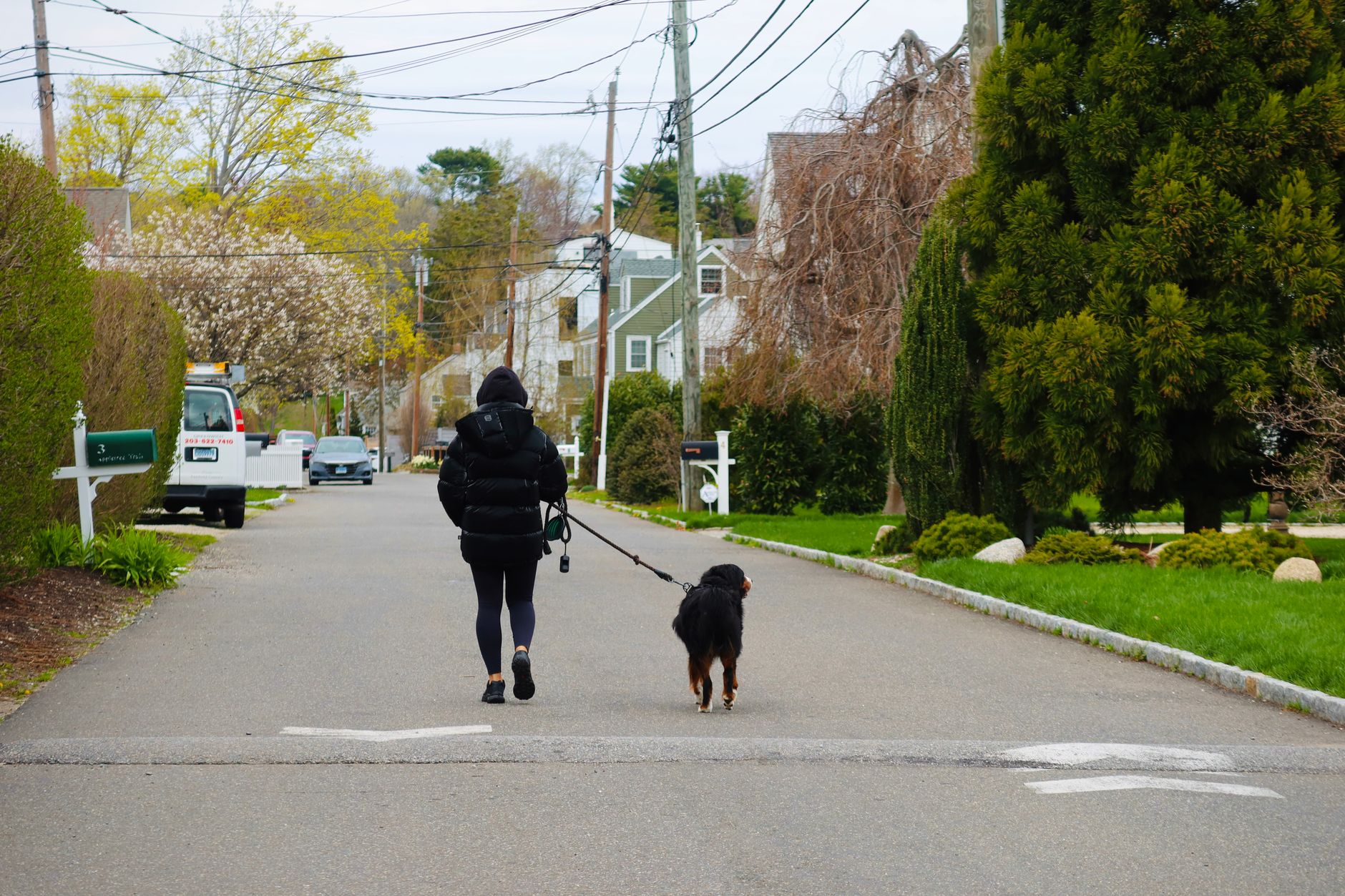
When a Dog Injures You Without Biting
Here is the distinction most people get wrong. Section 3342 covers a person who is bitten. A dog that knocks you down, takes out your front wheel in a bike lane, or lunges hard enough to pull its handler into you has hurt you without biting you. Strict liability does not reach those injuries. They are negligence claims under Civil Code section 1714(a), and you must prove the owner failed to use reasonable care.
That does not make them weak cases. In Drake v. Dean (1993) 15 Cal.App.4th 915, a visitor approaching a home was knocked down by the residents’ dog and broke her hip. The Court of Appeal held the jury should have received negligence instructions independent of strict liability, reasoning that “negligence may be predicated on the characteristics of the animal which, although not abnormal to its class, create a foreseeable risk of harm.” You need not show the dog was abnormally dangerous, only that a dog handled this way foreseeably could hurt someone. Because the proof burden is higher, the leash ordinance matters far more here than in a bite case.
How an Off-Leash Violation Feeds a Negligence Claim
The mechanism is negligence per se, which in California is an evidentiary presumption, not a separate claim. Evidence Code section 669(a) presumes a failure to exercise due care where a person violated an ordinance; the violation proximately caused injury; the injury resulted from an occurrence of the nature the ordinance was designed to prevent; and the injured person was one of the class it was adopted to protect.
A leash ordinance maps onto those elements cleanly. Leash rules exist to keep loose dogs from harming people in public, and a pedestrian or cyclist sits inside the protected class. Where the violation let the dog reach you, the burden shifts onto the owner.
It is a presumption, not a verdict. Section 669(b) allows rebuttal by proof that the violator did what might reasonably be expected of a person of ordinary prudence who desired to comply with the law. Owners argue the leash broke, someone else opened the gate, or the spot was an exempt off-leash area. Whether the presumption applies turns on the ordinance language, which courts have not addressed for every jurisdiction.
Landlords, Property Owners, and Filing Deadlines
A tenant’s dog often means a tenant with no insurance, so landlord liability comes up constantly, and California draws a narrow line. Under Uccello v. Laudenslayer (1975) 44 Cal.App.3d 504, “a landlord is under no duty to inspect the premises for the purpose of discovering the existence of a tenant’s dangerous animal; only when the landlord has actual knowledge of the animal, coupled with the right to have it removed from the premises, does a duty of care arise.” Actual knowledge is required, though it can be inferred from circumstantial evidence, which makes the case a documentation exercise: complaints to the property manager, a lease clause allowing removal, earlier animal control reports. Note too that section 3342 attaches to the dog’s owner, so a walker or sitter is usually a negligence defendant.
Code of Civil Procedure section 335.1 gives you two years from the date of injury, and section 352(a) tolls that period while the injured person is a minor, which matters, because children are so often the ones hurt. If a public entity is involved, Government Code section 911.2 imposes a six-month deadline.
Frequently Asked Questions
Is there a statewide leash law in California?
No general one. California has no statute requiring every dog to be leashed on public streets. The state code reaches only narrow situations, such as dogs under four months, which Health and Safety Code section 121690(c) requires be confined or restrained. Everything else comes from local ordinances.
What is the leash length limit in Los Angeles?
Six feet under both codes, though which governs depends on the address. In unincorporated Los Angeles County, section 10.32.010 prohibits dogs running at large, and the county describes the rule as a substantial leash not exceeding six feet held by a person capable of controlling the dog. In the City of Los Angeles, Municipal Code section 53.06.2 sets the same limit. San Francisco sets its limit at eight feet.
Can I sue if a dog knocked me down but never bit me?
Yes, but not under the strict liability statute. Civil Code section 3342 applies to a person who is bitten. A knockdown, a chase that causes a fall, or a dog-caused bicycle crash is a negligence claim, so you must prove the owner failed to use reasonable care. Drake v. Dean (1993) 15 Cal.App.4th 915 allows that claim even where the dog had no history of aggression.
Does an off-leash citation mean the owner automatically owes me money?
No. A citation is a municipal matter and pays nothing by itself. Its value is evidentiary: under Evidence Code section 669, an ordinance violation presumes a failure to exercise due care where the violation caused the injury, the injury was the kind the ordinance targeted, and you were within the class it protects. The owner may still rebut it.
How long do I have to file a California dog injury claim?
Two years from the date of injury under Code of Civil Procedure section 335.1, for both bite and non-bite claims. If the injured person is a child, section 352(a) tolls that period during minority. Where a public entity is a defendant, Government Code section 911.2 requires a claim within six months.
If a loose dog hurt you or your child in California, the details that decide the claim are worth sorting out before you speak with an adjuster. Read how we handle dog bite cases, premises liability claims, and catastrophic injuries, then reach us through our contact page or call (888) 977-2238.
This article is provided for general informational purposes only and does not constitute legal advice. Reading it does not create an attorney-client relationship. Every case is different and past results do not guarantee a similar outcome. If you have been injured, speak with a licensed attorney about your specific situation.