


Daylight saving time ends at 2 a.m. on Sunday, November 1, 2026, and the evening commute will suddenly happen in the dark. A new analysis shows why that matters for daylight saving time crashes. On October 23, CT Insider reported on 11 years of Connecticut crash data, from 2015 through 2025. In the two weeks after the clocks fell back, the 5 p.m. hour accounted for 17% of pedestrian crashes, nearly triple its share in the two weeks before. For cyclists, that hour’s share of crashes rose from 9% to 16%.
Connecticut is not California, but the same basic risk applies anywhere the sun sets an hour earlier on the clock while people still walk, bike and drive home at the same time. Here is what the national data shows, what California law requires in the dark, and what to do if you are hurt.
The numbers: darkness and crashes
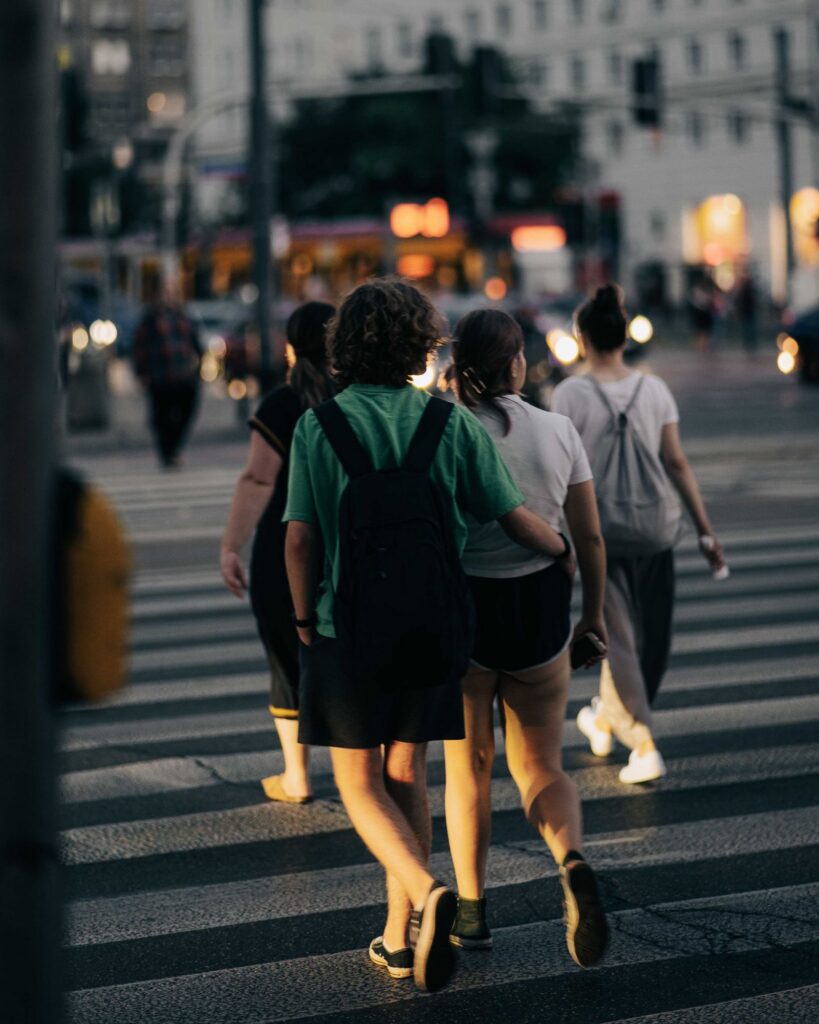
Federal data shows how much more dangerous darkness is for people outside a car. In its report on 2024 pedestrian deaths, the National Highway Traffic Safety Administration (NHTSA) found that 76% of the 7,080 pedestrians killed nationwide died in the dark. The 6 p.m. to 8:59 p.m. time block had the most deaths, 24%. California had 1,090 pedestrian deaths in 2024, which was 28.1% of all traffic deaths in the state.
Cyclists face the same risk. NHTSA’s report on 2024 bicyclist deaths counted 1,103 cyclists killed nationwide, and 52% of them died in the dark. The 6 p.m. to 8:59 p.m. block had the highest share on both weekdays (21%) and weekends (26%). California had 163 cyclist deaths in 2024, second only to Florida.
Why the time change raises the risk
When the clocks fall back, the evening commute moves into darkness overnight, while many people keep the same schedules. People walking and biking home become harder to see, and drivers who have been heading home in daylight for months now have to spot pedestrians in dark clothing, cyclists without lights and people crossing mid-block. A driver who keeps the same speed and habits from summer evenings has less time to see and react.
What California law says about driving, walking and biking in the dark
California law sets clear rules for darkness, which Vehicle Code section 280 defines as the period from half an hour after sunset to half an hour before sunrise, and any other time when visibility is too poor to clearly see a person or vehicle 1,000 feet away.
- Vehicle Code section 24400 requires drivers to use at least two lighted headlamps during darkness, and also when rain, fog or mist means the windshield wipers must run continuously.
- Vehicle Code section 22350, the basic speed law, bars driving faster than is reasonable or prudent given visibility. Driving at the posted limit can still be too fast on a dark street.
- Vehicle Code section 21950 requires drivers to yield to pedestrians in marked crosswalks and unmarked crosswalks at intersections, and to slow down as needed to keep them safe.
- Vehicle Code section 21954 says pedestrians crossing outside a crosswalk must yield to close vehicles, but drivers still have a duty to use due care for any pedestrian on the road.
- Vehicle Code section 21956 says that outside a business or residence district, a pedestrian walking on the road must stay close to the left edge. A pedestrian may use the right edge if there is no crosswalk or other safe way to cross, or if crossing would be unsafe.
- Vehicle Code section 21201(d) requires a bicycle ridden in darkness to have a white front lamp visible from 300 feet, a red rear reflector or a red light with a built-in reflector visible from 500 feet, white or yellow reflectors on the pedals, shoes or ankles visible from 200 feet, and side reflectors or reflectorized tires. Under section 21201(f), an electric bicycle must have the red rear reflector or light at all hours.
- Vehicle Code section 22500(n) generally bars stopping or parking within 20 feet of the approach side of any marked or unmarked crosswalk, or within 15 feet where there is a curb extension, so the approach to a crosswalk stays clear.
Under Civil Code section 1714(a), anyone whose lack of ordinary care injures someone else is responsible for that injury. California also follows comparative fault. In Li v. Yellow Cab Co. (1975) 13 Cal.3d 804, the California Supreme Court held that an injured person who was partly at fault can still recover, with the amount reduced in proportion to their share of fault. A pedestrian in dark clothes or a cyclist with a missing reflector may still have a claim against a driver who was speeding, distracted or not using headlights.
Deadlines to know
Under Code of Civil Procedure section 335.1, most California injury lawsuits must be filed within two years. If a public entity may share responsibility, such as when a city’s streetlights were out or a road was dangerously designed, Government Code section 911.2 requires a written claim within six months. Missing that deadline can end a claim.
What to do if you are hit after dark
- Call 911 and get medical care right away, even if you feel fine.
- Make sure police respond and make a report, and get the report number. A driver who injures someone must stop under Vehicle Code section 20001.
- Take photos of the scene, including the lighting, streetlights, crosswalk markings and the vehicle’s headlights.
- Get the names and phone numbers of witnesses.
- Ask nearby homes and businesses for security camera video quickly, before it is recorded over.
- Keep the clothing, bike and lights you had that night. They can show how visible you were.
- Do not give a recorded statement to the driver’s insurance company, and do not sign anything before you get legal advice.
- Keep every medical bill and record of missed work.
B&D Injury Law Group can help
Darker evenings come back every year, and so does the extra risk. If you or someone you love was hit while walking, biking or driving after dark, B&D Injury Law Group can investigate what happened, gather evidence before it disappears and explain your options under California law. Learn more about our pedestrian accident lawyers, our bicycle accident lawyers and our car accident lawyers, or read our guide to California bicycle laws. Call (888) 977-2238 to talk with our team.
Sources: CT Insider, analysis of Connecticut pedestrian and cyclist crashes after the clock change, via Yahoo News (Oct. 23, 2026); NHTSA, Pedestrians: 2024 Data (DOT HS 813 818); NHTSA, Bicyclists and Other Cyclists: 2024 Data (DOT HS 813 822); California Vehicle Code sections 280, 20001, 21201, 21950, 21954, 21956, 22350, 22500 and 24400; Civil Code section 1714; Code of Civil Procedure section 335.1; Government Code section 911.2; Li v. Yellow Cab Co. (1975) 13 Cal.3d 804. Statutes checked on leginfo.legislature.ca.gov on October 26, 2026.
Attorney advertising. This article is general information, not legal advice. Reading it or contacting us does not create an attorney-client relationship. Every case is different, and results will differ based on different facts. Past results do not guarantee a similar outcome, and no result is guaranteed. B&D Law Group, APLC, Los Angeles office: 10700 Santa Monica Blvd, Suite 200.
Related Reading
- Hurt in a Police Chase in California: Who Pays for Your Injuries?
- Uninsured Motorist Claims in California: How UM and UIM Coverage Works
- Hit by a Fire Truck, Ambulance or Police Car in California: Your Claim
- As Discussed on KGET 17: Auto Insurance Coverage Types in California
- Bicycle Accident Attorneys — B&D Law Group