


Quick answer
On KGET 17, attorney Alina Dermendjian said slip and falls and hit-and-runs are the most frequent holiday injury claims. In California, a hit-and-run injury claim under your uninsured motorist coverage requires physical contact, a police report within 24 hours and a sworn statement to your insurer within 30 days. Insurance Code section 491 bars premium increases based on accidents where you were not at fault.
The holidays bring crowded stores, packed parking lots and more cars on the road. On KGET 17’s Studio 17 Live, attorney Alina Dermendjian of B&D Injury Law Group talked about the injury claims people bring most often this time of year and how to protect yourself. You can watch the KGET 17 Studio 17 Live segment on holiday injury claims.
As discussed on KGET 17, Studio 17 Live (December 2024)
Alina explained that slip and fall incidents and hit-and-run crashes are the most frequent injury claims she sees during the holidays, that evidence matters in a slip and fall, that many of these cases resolve without a lawsuit, and that the idea that using your own uninsured motorist coverage will raise your rates is a myth.
Segment presented by B&D Law Group, APLC.
Alina also joined Studio 17 in December 2022 to discuss common holiday injuries on KGET 17. Below, we expand on what she covered and explain how California law applies.
Why slip and falls and hit-and-runs come up during the holidays
In the segment, Alina named slip and fall incidents and hit-and-run accidents as the most frequent personal injury claims during the holiday season. Both make sense when you think about what the season looks like: spilled drinks and wet entryways in busy stores, cluttered aisles, poorly lit parking lots, and more drivers in a hurry.
California’s general negligence rule is in Civil Code section 1714. Subdivision (a) says everyone is responsible, not only for the result of their willful acts, but also for an injury occasioned to another by their want of ordinary care or skill in the management of their property or person, except so far as the injured person has willfully or by want of ordinary care brought the injury upon themselves. That is the rule behind most slip and fall claims against stores and property owners, and behind most car crash claims against careless drivers, and the closing exception is why your own care matters too.
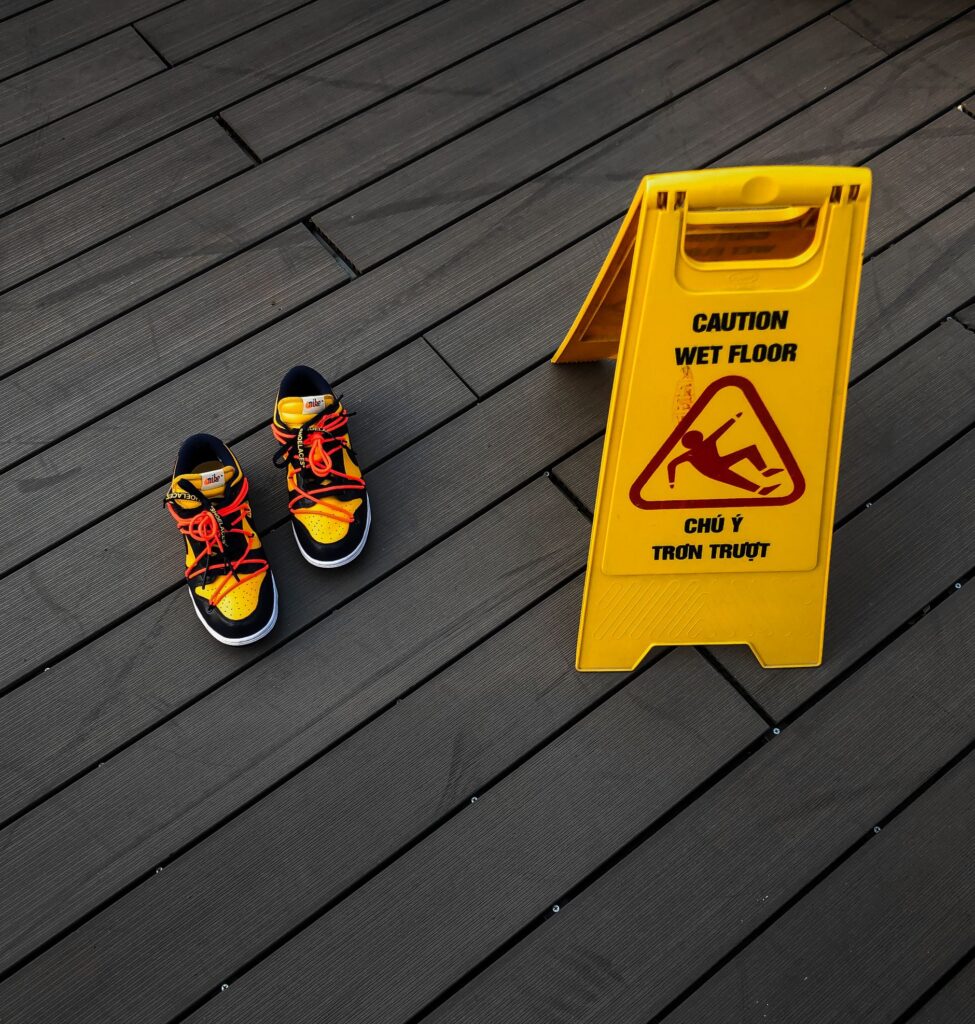
Evidence that helps a slip and fall claim
Alina stressed evidence. In a slip and fall, the question is usually whether the property owner knew or should have known about the hazard and failed to fix it or warn people. Evidence often disappears fast, so these steps help:
- Photos of the exact spot. Capture the spill, debris, broken tile, poor lighting or missing warning sign, plus your shoes and the surrounding area.
- Witness names and phone numbers. Other shoppers and employees may remember how long the hazard was there.
- An incident report. Ask the store manager to write one up and ask for a copy or the report number.
- Medical records. Get checked out promptly and tell the provider exactly how you fell. Records made close to the fall tie your injury to the incident.
- Video. Many stores have cameras. Footage can be overwritten, so a lawyer may send a preservation letter early.
For more on this, see our guide on what to do after a slip and fall in California.
If the fall happened on public property, such as a city sidewalk or a government building, a different rule applies. Under Government Code section 911.2, a claim for personal injury against a public entity generally must be presented no later than six months after the injury. That is much shorter than the normal deadline.
Many cases resolve without a lawsuit
Alina noted that many slip and fall cases settle out of court, especially when the responsible party’s insurer makes a fair offer, and that resolving a case without filing a lawsuit can be a cost-effective choice. She said hit-and-run cases can also be resolved out of court.
Whether a case settles, and for how much, depends on the facts, the evidence and the insurance involved. No one can promise an outcome. What matters is knowing your deadlines so settlement talks do not run out the clock. In California, Code of Civil Procedure section 335.1 sets a general two-year deadline to file a lawsuit for injury caused by someone else’s wrongful act or neglect. Our article on how long you have to file a personal injury claim in California covers the exceptions.
Hit-and-run crashes and your uninsured motorist coverage
When the driver who hit you cannot be identified, there is no at-fault driver’s insurer to claim against. That is where uninsured motorist (UM) coverage comes in. Under Insurance Code section 11580.2, a vehicle whose owner or operator is unknown can be treated as an “uninsured motor vehicle.” For bodily injury in a hit-and-run, the statute sets specific conditions:
- Physical contact. The injury must have arisen from physical contact of the hit-and-run vehicle with you or with the vehicle you were in.
- Report within 24 hours. You, or someone for you, must report the accident within 24 hours to the police department of the city where it happened or, in an unincorporated area, to the county sheriff or the local California Highway Patrol office.
- Sworn statement within 30 days. Within 30 days after that, you must file a statement under oath with your insurer that you have a claim against a person whose identity cannot be determined, with facts supporting it.
Section 11580.2 also has its own time limit. Within two years of the accident, you must either file suit against the uninsured motorist, reach an agreement with your insurer on the amount owed, or formally start arbitration by notifying your insurer in writing by certified mail, return receipt requested.
Leaving the scene is also a crime. Vehicle Code section 20001 requires the driver of a vehicle involved in an accident resulting in injury to a person other than that driver, or in the death of a person, to stop immediately at the scene and meet the requirements of sections 20003 and 20004. For more, see our guide to hit-and-run accidents in California.
Will using your own insurance raise your rates?
Alina called the belief that using your own coverage raises your rates a myth, pointing out that if you have uninsured motorist coverage, you are paying for it every month. Here is what California law actually says, stated carefully:
- No increase for not-at-fault accidents. Insurance Code section 491 says a motor vehicle liability insurer’s rating plan shall not provide for a premium increase based on an accident in which the insured is not at fault, as determined by the accident report or the insurer.
- What “at fault” means. Under California Insurance Commissioner regulations (California Code of Regulations, title 10, section 2632.13), an insurer cannot treat a driver as “principally at-fault” unless the driver’s actions were at least 51 percent of the legal cause of the accident, and other conditions are met.
- Hit-and-run presumption. The same regulation creates a rebuttable presumption that a driver is not principally at fault when the driver’s vehicle was damaged by contact with a hit-and-run driver and the accident was reported to legal authorities within a reasonable time.
- Insurer must investigate. Before finding you principally at fault, your insurer must investigate, send you written notice of its decision, and allow you to ask for reconsideration within 30 days of receiving that notice.
These rules protect drivers who were not at fault. They do not mean an insurer can never change your premium for any reason, and the presumption can be rebutted with contrary facts. If your insurer says you were at fault for an accident you believe you did not cause, you can ask it to reconsider within 30 days of receiving its written notice.
Key takeaways
- Slip and falls and hit-and-runs were the most frequent holiday claims Alina described on KGET 17.
- In a slip and fall, photograph the hazard, get witness contacts, ask for an incident report and see a doctor promptly.
- For a hit-and-run injury claim under your UM coverage, Insurance Code section 11580.2 requires a police report within 24 hours and a sworn statement to your insurer within 30 days.
- Insurance Code section 491 bars premium increases based on accidents where you were not at fault.
- The general deadline to sue is two years (Code of Civil Procedure section 335.1). Claims against public entities generally must be presented within six months.
Talk to a California injury attorney
If you were hurt in a fall or a hit-and-run this season, we can review what happened, explain your deadlines and help you deal with the insurance companies. Call B&D Injury Law Group at (888) 977-2238 or contact us online.
Attorney advertising. This article is general information, not legal advice. Reading it or contacting us does not create an attorney-client relationship. Every case is different, and results will differ based on different facts. Past results do not guarantee a similar outcome, and no result is guaranteed. B&D Law Group, APLC, Los Angeles office: 10700 Santa Monica Blvd, Suite 200.
Related Reading
- 3 Dead After CHP Pursuit Ends in Crash on the 10 Freeway in Baldwin Park (Nov. 7, 2026)
- Wrong-Way Crash on the 10 Freeway in Downtown LA Kills 1 (Nov. 23, 2026)
- As Discussed on KGET 17: Holiday Car Accident Risks and What to Do
- California Bans Waymo From Freeways: What It Means If a Driverless Car Hurts You
- Car Accident Attorneys — B&D Law Group