

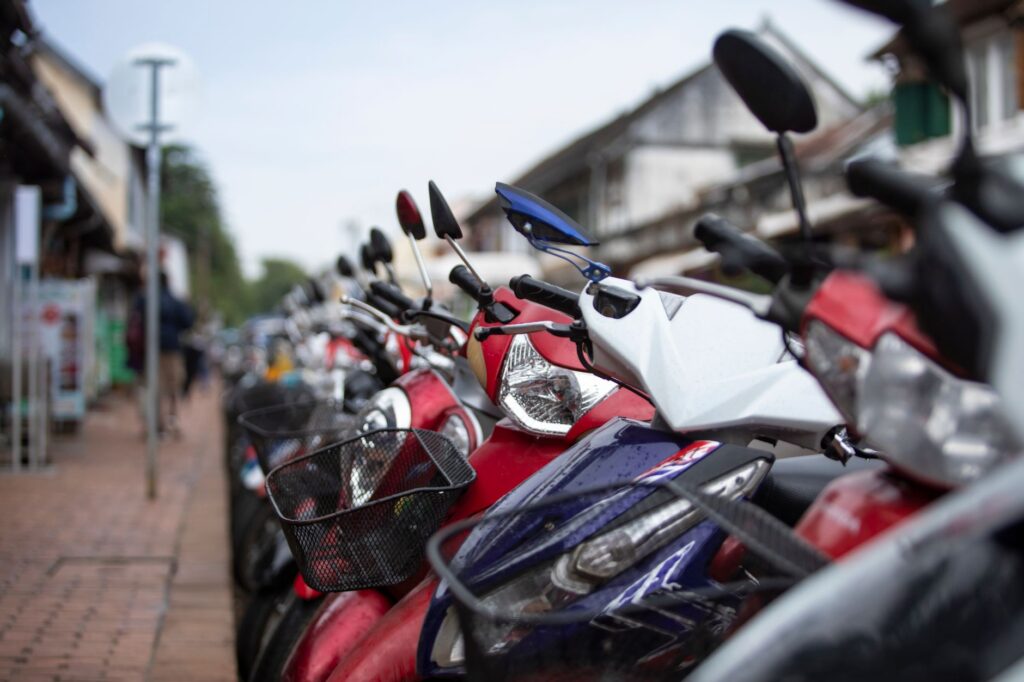
California has no statute called “the moped law.” It has a definition. Vehicle Code section 406(a) says a “motorized bicycle” or “moped” has two or three wheels and fully operative pedals, or no pedals if it runs solely on electricity, plus an automatic transmission and a motor under 4 gross brake horsepower with a top speed no greater than 30 miles per hour on level ground. Meet all of that and you need a Class M1 or M2 license, a special DMV plate, and a helmet. Miss one element and your machine is legally something else, which changes the rules and the shape of your claim.
At B&D Law Group, APLC, we handle motorcycle, moped, and scooter injury claims throughout California. In a moped case the first question is rarely who ran the light. It is what the rider was legally operating — the answer decides which code sections an adjuster gets to argue about and where the money will come from.
What Counts as a Moped Under Vehicle Code Section 406
Those conditions must all be true at once. Fail one and the device is not a motorized bicycle, whatever the seller called it. Many machines advertised as mopeds are, on the numbers, motor-driven cycles or full motorcycles, and the manufacturer plate and governed top speed are the evidence.
The Legislature built a warning into the same section. Subdivision (b) requires every moped manufacturer to give buyers a separate sheet, in at least 14-point boldface type, stating in capital letters: “YOUR INSURANCE POLICIES MAY NOT PROVIDE COVERAGE FOR ACCIDENTS INVOLVING THE USE OF THIS BICYCLE.”
Moped, Motor-Driven Cycle, Motorized Scooter, or Motorcycle?
Four definitions sit within a few pages of each other, and California treats each one differently:
| Category | Section | Core definition | License | Helmet |
|---|---|---|---|---|
| Moped / motorized bicycle | CVC § 406(a) | Two or three wheels; pedals, or none if solely electric; automatic transmission; motor under 4 gross brake horsepower; top speed no more than 30 mph on level ground | Class M2 (an M1 also covers it) | Required, driver and passenger (§ 27803) |
| Motor-driven cycle | CVC § 405 | Any motorcycle with a motor displacing less than 150 cubic centimeters; excludes a motorized bicycle | Class M1 | Required, driver and passenger (§ 27803) |
| Motorcycle | CVC § 400(a) | A motor vehicle with a seat or saddle for the rider, designed to travel on not more than three wheels | Class M1 (two-wheel models) | Required, driver and passenger (§ 27803) |
| Motorized scooter | CVC § 407.5 | Two wheels, handlebars, and a floorboard or seat, powered by an electric motor; excludes motorcycles, motor-driven cycles, and mopeds | Driver’s license or instruction permit (§ 21235(d)) | Bicycle helmet only for riders under 18 (§ 21235(c)) |
The moped test is about pedals, horsepower, and a 30 mph ceiling. The motor-driven cycle test is one number applied to something already a motorcycle, and section 405 carves motorized bicycles back out so nothing is both. Section 407.5 excludes the other three outright, which is why a seated gas machine is almost never a legal motorized scooter.
Licensing, Registration, and Where You Can Legally Ride
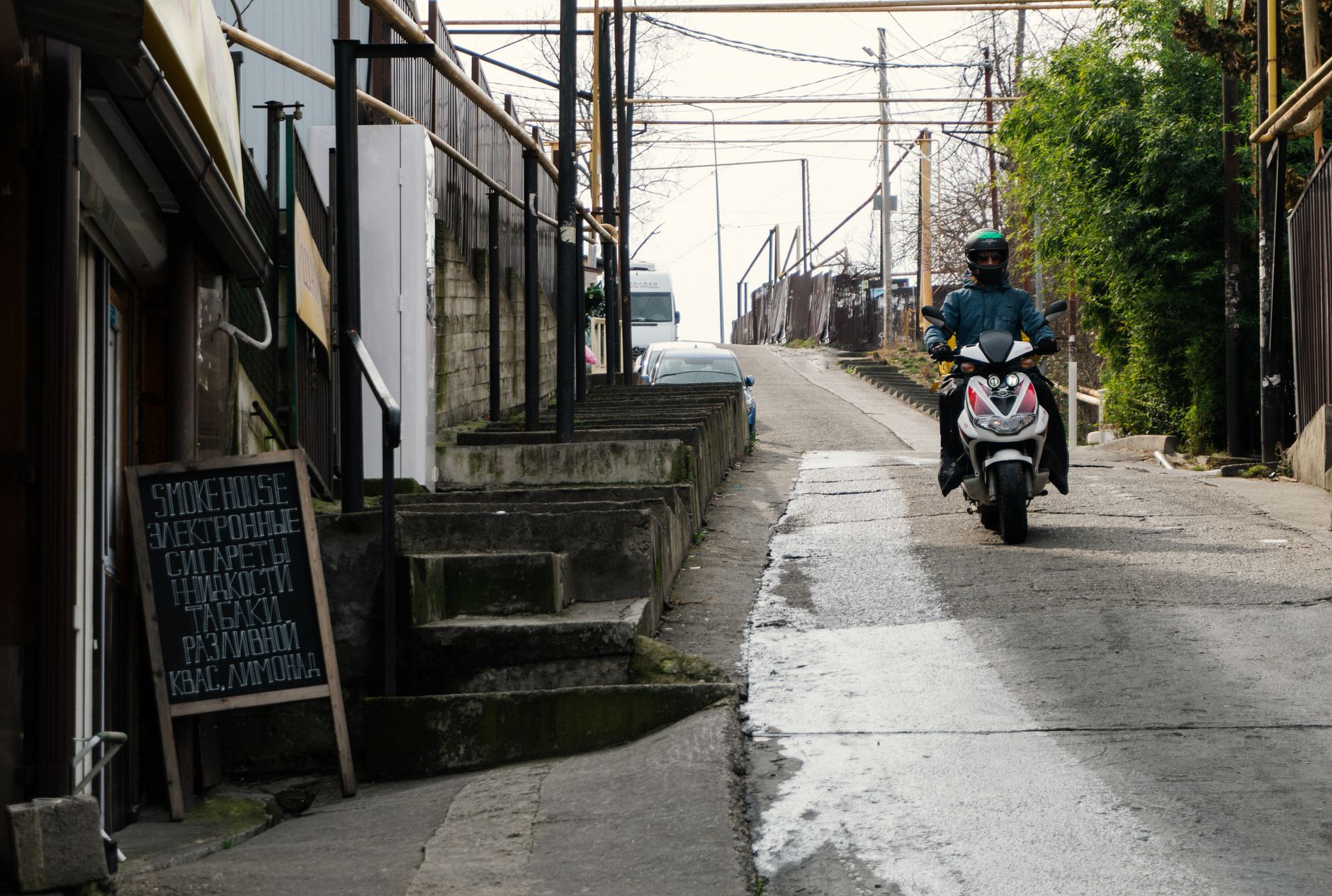
Vehicle Code section 12804.9(b) sets the classes. A Class M2 covers a motorized bicycle or moped, or a bicycle with an attached motor, except an electric bicycle described in section 312.5(a). A Class M1 covers a two-wheel motorcycle or motor-driven cycle, and an M1 holder may operate M2 vehicles without further testing. The DMV adds a minimum age of 16.
Registration works differently from a car. Section 5030 provides that a motorized bicycle as defined in section 406 must display a special license plate issued by the department. The DMV describes a one-time $23 fee for special plates and an identification card, and its registration manual states mopeds are not subject to annual renewal and no title is issued. The DMV also states insurance is not required to register a moped, which is a statement about the counter transaction, not about riding uninsured.
Where you may ride is narrower than riders expect. Section 21207.5(a) provides that a motorized bicycle shall not be operated on a bicycle path or trail, bikeway, bicycle lane, equestrian trail, or hiking or recreational trail, unless it is within or adjacent to a roadway or a local ordinance permits it. Section 21960 adds that freeway and expressway restrictions on bicycles and motor-driven cycles are deemed to include motorized bicycles.
Helmets, Head Injuries, and Comparative Fault
Section 27803 requires a driver and any passenger to wear a safety helmet meeting section 27802 when riding on a motorcycle, motor-driven cycle, or motorized bicycle on the highways. There is no age cutoff, unlike the bicycle helmet rule in section 21212, and the only exception is narrow: a fully enclosed three-wheeled vehicle of at least seven feet, four feet wide, and 900 pounds unladen.
If you were not wearing one, expect the insurer to raise it. California follows pure comparative fault under Li v. Yellow Cab Co. (1975) 13 Cal.3d 804, so recovery is reduced by your share of responsibility rather than eliminated. The argument also has a limit. Under Evidence Code section 669, a violation raises a presumption of failure to exercise due care only where it proximately caused the injury and the injury was of the type the statute was designed to prevent. A helmet statute targets head injury. It does no work on a shattered tibia.
Moped riders are also nearly invisible in the safety data. In “Motorcycles: 2023 Data” (DOT HS 813 732, July 2025), the National Highway Traffic Safety Administration counted 6,335 motorcyclists killed in 2023, 15 percent of all traffic fatalities, and states that its motorcycle category includes mopeds and motor scooters. Moped deaths are folded into that figure, not tracked separately.
Insurance When a Moped Rider Is Hit
Start with the at-fault driver. California’s minimum liability limits rose under SB 1107 effective January 1, 2025, and the DMV lists them as $30,000 for injury or death to one person, $60,000 for more than one, and $15,000 for property damage. Those minimums are often exhausted by the emergency department bill alone.
That is why your own uninsured and underinsured motorist coverage usually carries the case. Insurance Code section 11580.2(d) provides that where more than one uninsured motorist provision is available to you, damages are not deemed to exceed the higher of the applicable limits — the highest single limit, not policies added together.
There is a trap specific to moped riders. Section 11580.2(c)(6) permits an insurer to exclude uninsured motorist coverage for bodily injury to the insured while occupying a motor vehicle owned by an insured, unless the occupied vehicle is an insured motor vehicle. Vehicle Code section 415(a) defines a motor vehicle as one that is self-propelled, which a moped is. So if you own the moped and never listed it on a policy, your own coverage may be excluded for the very ride you were hurt on. Bring the full policy to a lawyer.
A second question is genuinely unsettled. Section 21224(a) exempts motorized scooter operators from the code’s financial responsibility, registration, and license plate provisions; mopeds get no parallel exemption. Section 16020(a) requires all drivers and owners of a motor vehicle to be able to establish financial responsibility at all times, yet the DMV says no insurance is needed to register a moped. That tension matters because Civil Code section 3333.4, enacted by Proposition 213, bars non-economic damages for an injured person who owned a vehicle involved in the crash that was not insured as California law requires. How that applies to an uninsured moped is not something we can state as a clean rule, and it should be reviewed by counsel.
Why Your Own Licensing Violation Does Not Defeat Your Claim
Riders operating without the M1 or M2 endorsement often assume the claim is dead. It is not. Evidence Code section 669 is why: a violation raises the negligence presumption only when it proximately caused the injury and the injury is of the type the statute was designed to prevent.
Not having sat for a DMV skills test does not cause the driver ahead of you to turn left across your path. Where the licensing gap has no causal connection to the collision, it does not become the driver’s defense, and even where rider conduct did contribute, Li reduces recovery instead of barring it. Adjusters raise it anyway because it is useful pressure. The answer is documentation: the police report, scene photographs, vehicle damage, witnesses, and medical records.
Frequently Asked Questions
Is a moped considered a motor vehicle in California?
For most purposes, yes. Vehicle Code section 415(a) defines a motor vehicle as one that is self-propelled, and a moped plainly is. A motorized scooter is different: section 21224(a) removes its operator from the code’s financial responsibility, registration, and license plate rules. Mopeds get no such exemption.
Do you need a motorcycle license to ride a moped in California?
Yes. Vehicle Code section 12804.9(b) places a motorized bicycle or moped in the Class M2 category, and a Class M1 also authorizes M2 vehicles without further testing. The DMV states you must hold an M1 or M2 and be at least 16. A motorized scooter is the outlier: under section 21235(d) its operator needs only a valid driver’s license or instruction permit.
Do you have to register a moped in California?
Yes. Vehicle Code section 5030 provides that a motorized bicycle as defined in section 406 must display a special license plate issued by the department. The DMV describes a one-time $23 fee for plates and an identification card, with no annual renewal.
Can you ride a moped in a bike lane in California?
It depends on the bikeway. Section 21207.5(a) provides that a motorized bicycle shall not be operated on a bicycle path or trail, bikeway, bicycle lane, equestrian trail, or hiking or recreational trail, unless it is within or adjacent to a roadway or a local ordinance permits it. A striped lane on a city street generally falls inside that exception; a separated park path does not.
Does not wearing a helmet reduce a moped injury settlement in California?
It can, within limits. Section 27803 requires a helmet for the driver and any passenger of a motorized bicycle, so an insurer will argue comparative fault under Li v. Yellow Cab Co. (1975) 13 Cal.3d 804, which reduces recovery by your share of responsibility and never bars the claim. Evidence Code section 669 constrains it: the violation must have proximately caused the injury, and the injury must be of the type the statute was designed to prevent. A helmet statute targets head injury.
If you were hurt riding a moped or a scooter in California, the classification and coverage questions should be answered before you talk numbers with an adjuster. Our team handles these claims through our motorcycle accident attorneys, bicycle accident attorneys, and car accident attorneys practices. Reach us at (888) 977-2238 or through our contact page.
This article is provided for general informational purposes only and does not constitute legal advice. Reading it does not create an attorney-client relationship. Every case is different and past results do not guarantee a similar outcome. If you have been injured, speak with a licensed attorney about your specific situation.