

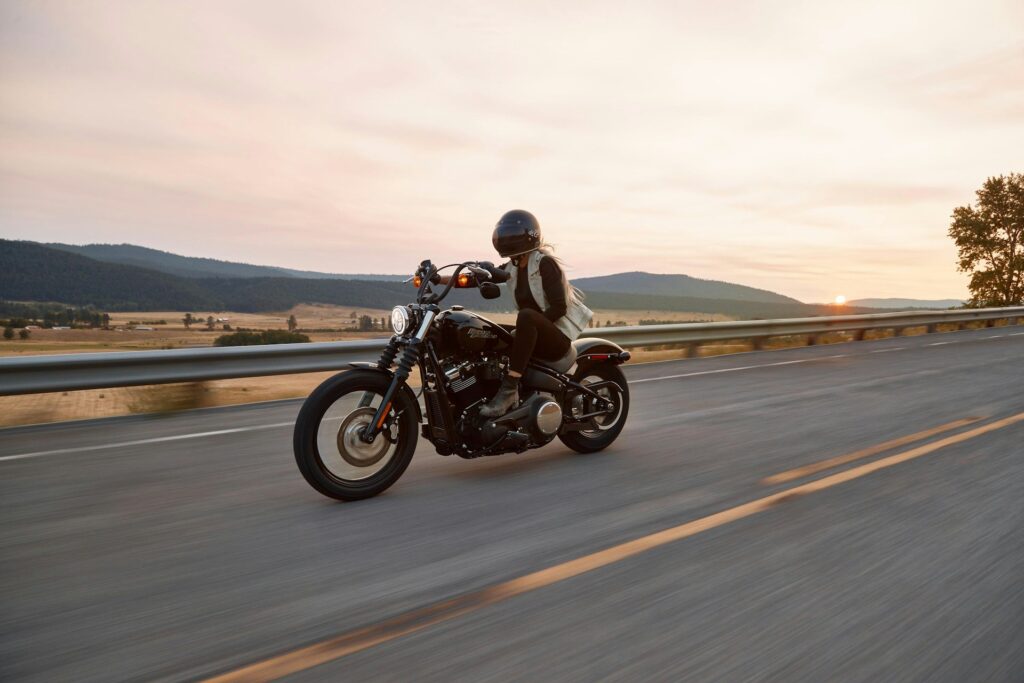
If you were hit by an uninsured motorcyclist in California, your own uninsured motorist coverage is usually the main source of recovery. You can also sue the rider personally, though many uninsured riders have little to collect. A motorcycle accident without insurance is still a valid claim, but where the money comes from changes.
B&D Injury Law Group handles motorcycle and vehicle claims throughout California. This article explains what happens when the at-fault rider has no coverage, what happens when you are the uninsured one, how uninsured motorist coverage works, and the steps to take right away.
What Happens After a Motorcycle Accident Without Insurance?
The claim does not disappear. Fault is still determined the same way, and the at-fault party is still legally responsible. What changes is collection. Without a liability policy, recovery depends on your own uninsured motorist coverage, the rider’s personal assets, or another responsible party such as an employer or vehicle owner.
California requires drivers and riders to carry liability insurance, and riding without it exposes the rider to license suspension and vehicle penalties. Those consequences do not pay your medical bills, which is why your own coverage matters so much here.
Motorcycle crashes tend to produce serious injuries. When there is no liability policy behind them, the gap between the harm and the available money can be large.
How Does Uninsured Motorist Coverage Work in California?
Uninsured motorist coverage, often written as UM or UM/UIM, pays for your injuries when the at-fault party has no insurance or not enough. It sits on your own auto or motorcycle policy and pays up to your selected limit. California insurers must offer it, but you can decline it in writing.
Underinsured motorist coverage applies when the other party has a policy that is too small to cover your losses. In California, underinsured coverage generally pays the difference between the at-fault party’s limits and your own limits, not your full limit on top.
Uninsured motorist coverage typically also applies in hit-and-run situations, though carriers usually require prompt reporting and, in some cases, evidence of physical contact. Check your policy language early.
| Situation | Primary source of recovery | Key limitation |
|---|---|---|
| At-fault rider has no insurance | Your uninsured motorist coverage | Capped at your UM limit |
| At-fault rider has a small policy | Their liability policy, then your UIM | UIM pays the difference, not a full second limit |
| Hit-and-run rider never identified | Your uninsured motorist coverage | Prompt reporting and policy conditions apply |
| You have no UM coverage | Direct claim against the rider | Only as collectible as their assets |
Can You Still Sue an Uninsured Motorcyclist?
Yes. Lack of insurance is not a defense to a negligence claim. You can file suit and, if you win, obtain a judgment against the rider personally. The practical question is collectability, since a judgment against someone with no assets and no policy may recover little.
A judgment in California is enforceable for years and can be renewed, so it is not always worthless. Wage garnishment, bank levies, and liens on property are available enforcement tools if the person’s circumstances improve.
California also allows an unsatisfied judgment from a motor vehicle case to be reported to the DMV, which can lead to suspension of the responsible party’s driving privileges until the judgment is addressed. That pressure sometimes produces payment.
What If You Were the Rider Without Insurance?
You can still bring a claim against the driver who hit you, but California limits what you recover. Under Civil Code section 3333.4, an uninsured owner or operator generally cannot recover non-economic damages such as pain and suffering. Economic losses like medical bills and lost wages remain recoverable.
That restriction significantly reduces the value of many motorcycle claims, because pain and suffering is often the largest component. It applies to the uninsured owner or operator of the vehicle involved, not to passengers who were simply riding along.
There is a limited exception in California law where the other driver was convicted of driving under the influence. If that applies to your crash, the analysis changes, so mention it early.
What Should You Do After a Crash With an Uninsured Rider?
Report it, document it, and notify your own insurer quickly, because uninsured motorist claims carry notice requirements that can be enforced strictly. The lack of a liability policy on the other side makes your own paperwork the case.
- Call police and make sure a report is generated with the rider’s information.
- Photograph both vehicles, the scene, the license plate, and any insurance card shown.
- Get the rider’s name, address, phone number, and license number.
- Collect witness contact information before anyone leaves.
- Get medical care the same day and follow through on referrals.
- Notify your own insurance company promptly and open an uninsured motorist claim.
- Request a copy of your declarations page so you know your actual UM limits.
- Talk to an attorney before giving a recorded statement or accepting an offer.
How Does Your Own Insurer Handle a UM Claim?
Your carrier steps into the role of the at-fault party’s insurer, which means it evaluates fault and damages and can dispute both. The relationship becomes adversarial even though you pay the premium. Many California policies also require disputes to go to arbitration rather than a jury trial.
You still owe your insurer cooperation, including reasonable access to records related to the crash. That is different from agreeing to everything an adjuster asks for, particularly broad medical authorizations covering unrelated history.
Deadlines in UM claims are set partly by contract, not just by the statute of limitations, and they can be shorter than you expect. Read the policy, or have someone read it, in the first weeks rather than the final month.
Frequently Asked Questions
Does my UM coverage apply if I was on my motorcycle?
It depends on which policy you carry. Uninsured motorist coverage on a motorcycle policy generally covers you while riding that motorcycle. Coverage on a car policy may exclude injuries sustained on a motorcycle you own. Because these exclusions are common, request your declarations page and full policy rather than assuming you are covered.
Will making a UM claim raise my rates?
California generally restricts insurers from surcharging a policyholder for a claim where they were not principally at fault. Rate practices vary and depend on your carrier and driving history. The alternative, absorbing serious medical bills yourself when the other party has no coverage, is usually far more costly than any premium change.
What if the uninsured rider offers to pay me directly?
Be careful. Private payment arrangements often stop once the initial amount is paid, and accepting money in exchange for signing a release can end your claim before you know the full extent of your injuries. Do not sign anything described as a release or settlement without understanding what rights it gives up.
Can I recover pain and suffering if I had no insurance?
Usually no. California law generally bars an uninsured owner or operator from recovering non-economic damages, including pain and suffering, even when the other party caused the crash. You can still pursue economic losses such as medical bills and lost income. A narrow exception exists where the other driver was convicted of DUI.
How long do I have to bring these claims?
A negligence claim against the at-fault rider generally must be filed within two years of the crash under California law. An uninsured motorist claim runs on your policy’s terms as well, and those contractual deadlines can be shorter. Confirm both timelines early rather than relying on the two-year figure alone.
If the person who hit you had no coverage, the first step is finding out what your own policy actually provides. Learn more about motorcycle accident claims, see how we handle insurance claim disputes, or contact us for a free case review.
This article is provided for general informational purposes only and does not constitute legal advice. Reading it does not create an attorney-client relationship. Every case is different and past results do not guarantee a similar outcome. If you have been injured, speak with a licensed attorney about your specific situation.