


Quick answer
Wash the bite right away with soap and water, apply antibiotic ointment and cover it with a clean bandage. See a doctor for a deep puncture, badly torn skin, heavy bleeding, signs of infection such as increasing swelling, pain or oozing, or any doubt about the dog's rabies status. Get the owner's contact details, since Civil Code section 3342 makes owners liable for most bites.
A dog nipped you. It broke the skin, but barely, and your instinct is to rinse it off and move on. That instinct is understandable, and it’s also why small dog bites sometimes become bigger problems days later. Here’s what to do, in order.
“Minor” Is About the Surface, Not the Risk
A superficial dog bite scrapes or breaks the top layers of skin without deep puncture or tearing, and most of those heal on their own. The complication is that dog teeth are shaped for puncturing: a small opening can go deeper than it looks and seal over quickly, trapping bacteria underneath.
Location, depth, and the dog’s vaccination history matter more than size. Bites on the hand, wrist, face, or over a joint deserve extra caution, as do bites to young children, older adults, and anyone with a weakened immune system or diabetes.
Step 1: Wash It, Properly and Right Away
The most useful thing you can do happens in the first few minutes. The CDC advises washing any wound from an animal bite immediately with soap and water, then planning to see a healthcare provider.
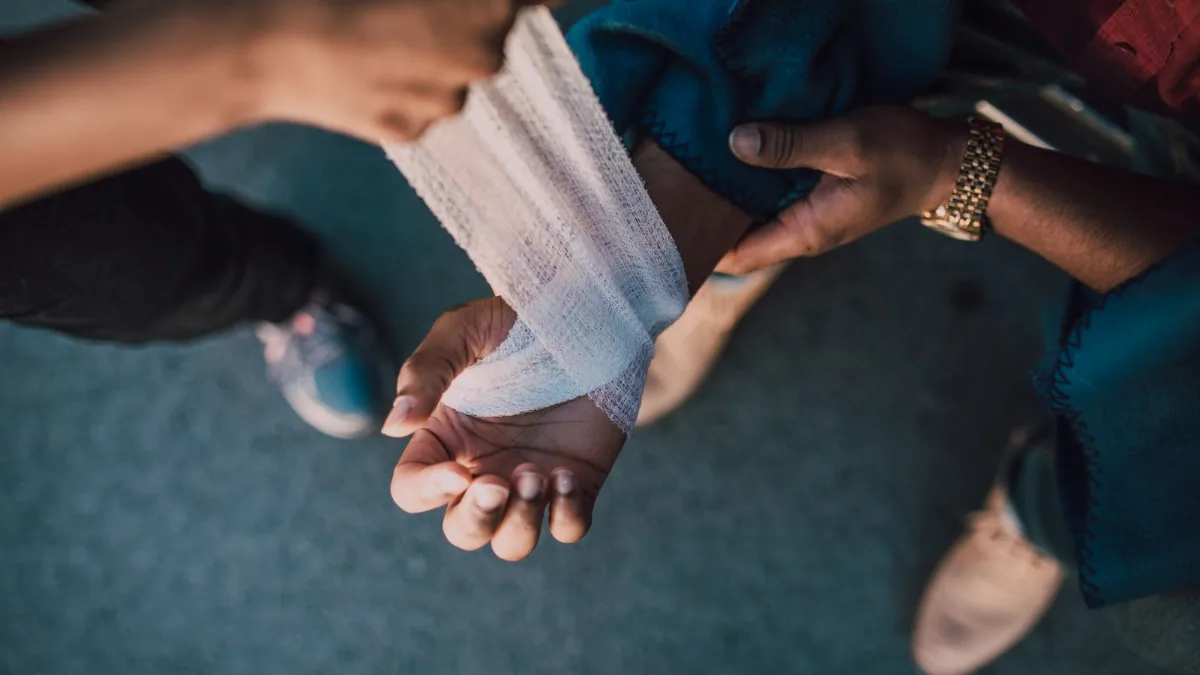
For a minor bite that only breaks the skin, Mayo Clinic’s first-aid guidance is to wash with soap and water, apply an antibiotic cream or ointment, and cover it with a clean bandage. Neither source calls for hydrogen peroxide.
Step 2: Decide Whether to See a Doctor
Mayo Clinic advises seeing a doctor if the wound is a deep puncture, is badly torn, is bleeding heavily, or shows signs of infection. Two other situations call for prompt advice regardless of how the wound looks: an overdue tetanus shot, and any question about the dog’s rabies status.
On tetanus, Mayo Clinic’s guidance is that if you have not had a tetanus shot in the past five years and the wound is deep or dirty, a provider may recommend a booster, given within 48 hours. On rabies, the CDC is direct: talk to a healthcare or public health professional about your exposure, and if post-exposure treatment is warranted, get it as soon as possible, because it is highly effective when given promptly. There’s a practical reason too: a same-day medical record is far more persuasive than one written from memory later.
Step 3: Watch for Infection Signs
Mayo Clinic lists the signs as increasing swelling, changes in skin color, pain, or oozing. Add red streaks, warmth, fever or chills, or a wound that feels worse instead of better. Any of those warrant a call to a doctor.
Step 4: Get the Owner’s Information
Get the owner’s name, phone number, and address, ask whether the dog’s rabies vaccination is current, photograph the wound before you bandage it, and note any witnesses, so that if the wound gets infected next week, you aren’t starting from zero.
Reporting a Dog Bite in California
California treats animal bites as a public health matter, not a private dispute. Under California Code of Regulations, Title 17, section 2606, anyone who knows of an animal suspected of having rabies must notify the local health officer immediately, and in officially declared rabies areas, the health officer must be notified whenever a person is bitten by a species subject to rabies, whether or not that animal is suspected of having it. In practice, reports typically go to county animal services or the county public health department.

Reporting is not an attack on the owner. It’s how the county confirms the dog’s vaccination status and whether an observation period is needed. That information protects you.
What California Law Says About Who Is Responsible
California is a strict liability state for dog bites, and our guide to dog bite liability in California covers the rule in depth. Civil Code section 3342(a) provides, in part, that “[t]he owner of any dog is liable for the damages suffered by any person who is bitten by the dog while in a public place or lawfully in a private place, including the property of the owner of the dog, regardless of the former viciousness of the dog or the owner’s knowledge of such viciousness.” The same subdivision defines lawful presence on private property to include being there to perform a duty imposed by state law or U.S. postal regulations, or being there by the owner’s express or implied invitation.
In plain English: you generally do not have to prove the dog bit someone before, or that the owner knew it was dangerous, unlike the “one bite” rule some states follow.
The statute is not unlimited. Trespassing can defeat a claim because the statute requires lawful presence, and provoking the dog can reduce or defeat one under California’s comparative fault rules. There are also exceptions under subdivisions (b) through (d) for agencies using dogs in military or police work; they apply only where the agency has a written policy on the necessary and appropriate use of the dog, and they do not shield the agency when the bitten person had nothing to do with the incident that prompted the dog’s use. Fuller explanation: Understanding Dog Bite Liability in California.
Is a Small Bite Worth a Claim?
It depends less on the bite than on what follows it. A superficial bite that heals in a week with no treatment usually has little to claim. But one that leads to infection, antibiotics, an urgent care bill, a rabies series, a visible scar, or missed work can involve real losses. These claims are often paid through the owner’s homeowners or renters insurance, though coverage varies from policy to policy.
No one can promise an outcome, and results vary from case to case. If your bite healed uneventfully and cost you nothing, it’s fine to walk away. Bites to children deserve a closer look. See When Children Are Injured in Accidents.
How Long You Have to Decide
California’s general deadline for a personal injury lawsuit, including most dog bite claims, is two years from the date of injury under Code of Civil Procedure section 335.1. That is not universal. If a public entity is involved, such as a police dog, a written claim to the entity is generally due within six months under Government Code section 911.2, but the minor tolling rule does not apply to those public-entity claims (section 352(b)); for claims against private owners, the deadline may be paused for injured minors under Code of Civil Procedure section 352(a). Evidence also gets harder to collect the longer you wait. Our detailed guide: How Long Do You Have to File a Personal Injury Claim in California?
Frequently Asked Questions
Is a superficial dog bite still dangerous?
It can be. A bite that breaks the skin can still introduce bacteria, and puncture wounds can be deeper than they appear. Wash it thoroughly, watch it closely, and seek care if you see signs of infection or your last tetanus shot was more than five years ago.
Do I need a tetanus shot after a dog bite?
Possibly. Mayo Clinic’s guidance is that a booster may be recommended when you have not had a tetanus shot in the past five years and the wound is deep or dirty, given within 48 hours. Your own provider makes that call.
Do I have to report a minor dog bite in California?
California regulations make animal bites a public health matter: suspected rabies must be reported to the local health officer immediately, and in declared rabies areas the health officer must be notified whenever a person is bitten by a species subject to rabies. Reports generally go through county animal services or public health. Reporting also creates a record, which helps if problems develop later.
Can I still make a claim if the bite seemed minor at first?
Yes. What matters is the harm that resulted, not how the wound looked on day one. If a small bite led to infection, treatment costs, scarring, or missed work, those are real losses, and California’s strict liability dog bite statute, Civil Code section 3342, may apply.
Talk It Through
If you were bitten in Los Angeles or Southern California and aren’t sure whether it’s worth pursuing, you’re welcome to ask. B&D Law Group, APLC offers free consultations, and part of an honest one is telling you when you probably don’t need a lawyer. Bring your photos and medical records, and call (888) 977-2238 whenever you’re ready.
This article is general information about California law and first-aid guidance from public health sources, not legal or medical advice. Reading it, or contacting B&D Law Group, APLC, does not create an attorney-client relationship. Every situation is different, results depend on the specific facts of each case, and no outcome is guaranteed. Past results do not guarantee a similar outcome. For medical concerns, contact a healthcare provider.