

Quick answer
If you are injured on public property in California, the deadline is much shorter than most people expect. Government Code section 911.2 requires a written claim to the public entity within six months of the injury. Government Code section 835 sets what you must prove: a dangerous condition, causation, foreseeable risk, and either an employee act that created it or notice in time to fix it. If a private operator controlled the space, the two year deadline in Code of Civil Procedure section 335.1 usually applies instead.
If you are injured on public property in California, the biggest difference from an ordinary injury claim is the clock. Before you can sue a city, a county, a school district or the state, you generally have to present a written claim to that public entity within six months of the injury under Government Code section 911.2. A claim against a private business on the same facts usually falls under the two year deadline in Code of Civil Procedure section 335.1. Large attractions often involve a public landowner and a private operator at once, so the first question is not only who was careless. It is who controls the ground you were standing on.
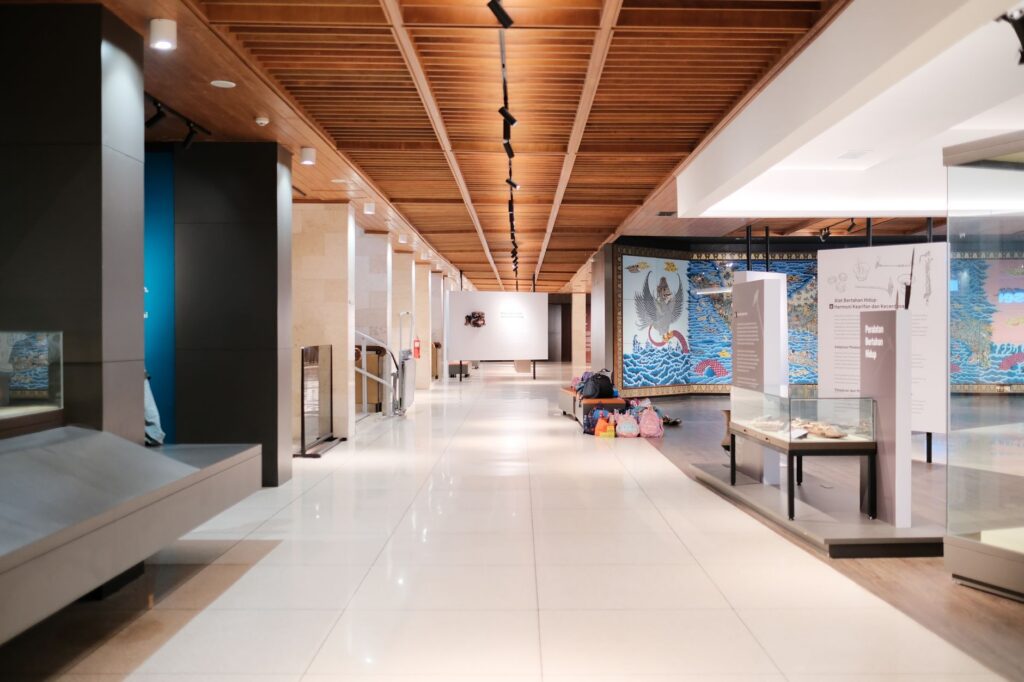
The Lucas Museum of Narrative Art opened to the public at Exposition Park in Los Angeles on September 22, 2026, the opening date reported by CBS News, which also reported that the museum was founded by filmmaker George Lucas and Mellody Hobson. Los Angeles Magazine reported that the building spans five stories near the California Science Center, the Natural History Museum and the Los Angeles Memorial Coliseum. No injury is involved in that reporting. The opening is simply a useful moment to explain a California rule many people never hear about until it matters, because the claim deadline can depend on who owns the property under your feet.
B&D Law Group, APLC is a personal injury law firm based in Los Angeles, California. Our practice includes premises liability claims across the state, including claims against public entities. What follows is general information about how California law treats injuries at museums, stadiums and similar venues.
Public Land and Private Operators Follow Different Rules
A private property owner in California owes visitors ordinary care. Civil Code section 1714(a) says everyone is responsible for an injury caused to another by a want of ordinary care in the management of their property or person. A person hurt by a hazard usually has to show the owner knew about it or should have known. In Ortega v. Kmart Corp. (2001) 26 Cal.4th 1200, the California Supreme Court held that an owner does not need actual knowledge of a dangerous condition, and that evidence of a failure to inspect within a reasonable time can support an inference the hazard existed long enough to be found. The same decision makes clear an owner who keeps reasonable inspection practices is not an insurer of visitor safety.
Public entities are treated differently. A city, county, transit district or state agency is not liable on a general negligence theory. Its liability for property conditions comes from a statute, and the claim has to fit that statute. Exposition Park, where the new museum sits, is managed by the Office of Exposition Park Management, a state office named in California Department of General Services project records for the park. That pattern is common. A publicly owned campus may hold buildings run by private nonprofits, concessionaires and event promoters, so which deadline applies can turn on who controlled the exact space where someone fell.
What a Claim Against a Public Entity Has to Show
Government Code section 835 sets the standard. Except as provided by statute, a public entity is liable for an injury caused by a dangerous condition of its property if the injured person establishes that the property was dangerous at the time of the injury, that the injury was proximately caused by that condition, and that the condition created a reasonably foreseeable risk of that kind of injury. The claim also needs one of two further points: that an employee acting within the scope of employment created the condition by a negligent or wrongful act or omission, or that the entity had actual or constructive notice of it in time to have taken protective measures.
Notice is often where these cases turn. A loose handrail, a broken step, an unmarked change in floor level or a recurring leak may qualify as a dangerous condition, but the record usually has to show how long it existed and what the entity knew. Maintenance logs, prior complaints and earlier incident reports for the same location tend to carry more weight than photographs alone.
The Six Month Claim Deadline and What Comes Next
Section 911.2 requires that a claim for death or injury to a person be presented no later than six months after the cause of action accrues. Claims for injury to personal property or growing crops also have six months, and claims for any other cause of action get one year. For claims against the State of California, the same section ties the presentation date to submission to the Department of General Services with a filing fee. The department’s Government Claims Program FAQ states the fee is $25 per claimant and that a fee waiver or reduction request form is available.
Missing six months is serious but not always the end. Government Code section 911.4 allows a written application for leave to present a late claim, made within a reasonable time and no later than one year after the cause of action accrued.
Once a claim is presented, Government Code section 912.4 gives the entity’s board 45 days to act, and the parties can agree in writing to extend that period. The lawsuit deadline then comes from Government Code section 945.6. If the entity gives written notice of its decision in the manner the statute describes, suit must be filed within six months after that notice is delivered or mailed. If no such notice is given, the period is two years from accrual.
Deadlines can shift for reasons the statutes do not spell out, including when a cause of action accrues, who the defendant turns out to be, and whether the injured person was a minor. Confirm your own deadline with a lawyer rather than calculating it yourself.
Practical Steps After an Injury at a Museum or Public Venue
A few simple steps preserve the information these claims depend on. Report the injury to venue staff before you leave, ask how it is being recorded and request a copy. Photograph the exact spot, including the surface, the lighting and any signage. Write down the precise location, because a gallery number is far more useful later than “the third floor.” Collect contact details for anyone who saw what happened, and keep your ticket or parking receipt.
Get medical attention promptly and describe how the injury happened, so the treatment record matches the incident. Then find out who owns the land and who operates the building, because that answer decides whether a six month government claim is in play. Being partly at fault does not end a claim. Under Li v. Yellow Cab Co. (1975) 13 Cal.3d 804, damages are reduced in proportion to the injured person’s share of fault rather than barred.
Frequently Asked Questions
Does the six month deadline apply to every injury at a public venue?
No. The six month deadline in Government Code section 911.2 applies to claims against public entities. If the space where you were hurt was controlled by a private company or nonprofit, the two year deadline in Code of Civil Procedure section 335.1 usually applies instead. A single campus can include both, so answer the ownership question early.
What happens if I miss the six month claim deadline?
Government Code section 911.4 allows a written application for leave to present a late claim, made within a reasonable time and no later than one year after the cause of action accrued. It must explain the delay and attach the proposed claim. Whether the entity grants it is a separate question.
How long does a public entity have to respond to my claim?
Government Code section 912.4 gives the board 45 days to act after a claim is presented, and the parties may agree in writing to extend that time. If the entity then gives written notice of its action as the statute requires, section 945.6 gives you six months from that notice to file suit. Without proper notice, the period is two years from accrual.
Is a museum responsible for every fall on its property?
No. A property owner is not an insurer of visitor safety. On private property, Ortega v. Kmart Corp. requires actual or constructive notice of the hazard, and reasonable inspection practices weigh in the owner’s favor. On public property, Government Code section 835 requires a dangerous condition plus either an employee act or omission that created it or notice in time to have addressed it.
If you were hurt at a venue in California and are not sure who owned or ran the space, it is worth answering that before a deadline passes. You can read more in our overview of California premises liability law, our article on slip and fall injuries in a California park, and our guide to how long you have to file a personal injury claim in California. If you would like to talk through your own situation, call (888) 977-2238 or reach our office through our contact page. We handle these claims through our premises liability attorneys.
Sources
- CBS News, Illustrating myths: The Lucas Museum of Narrative Art opens
- Los Angeles Magazine, The Lucas Museum of Narrative Art Opens in Exposition Park
- California Government Code section 911.2
- California Government Code section 911.4
- California Government Code section 912.4
- California Government Code section 945.6
- California Government Code section 835
- California Civil Code section 1714
- Justia, California Code of Civil Procedure section 335.1
- Justia, Ortega v. Kmart Corp. (2001) 26 Cal.4th 1200
- Justia, Li v. Yellow Cab Co. (1975) 13 Cal.3d 804
- California Department of General Services, Government Claims Program Frequently Asked Questions
- California Department of General Services, Exposition Park project record, Office of Exposition Park Management
This article was prepared by B&D Law Group, APLC, Los Angeles, California.
Attorney advertising. This article is provided for general informational purposes only and does not constitute legal advice. Reading this article or contacting us does not create an attorney-client relationship. Every case depends on its own facts, and results will differ based on different facts. Past results do not guarantee a similar outcome, and no result is guaranteed.
Related Reading
- Who Is Liable for an Amusement Park Ride Injury in California?
- What Legally Counts as a Sidewalk in California — and Who Pays If You’re Hurt on One
- What Happens If You Slip and Fall in a Store? Your Rights in California
- Premises Liability Lawyer in Las Vegas, NV
- Premises Liability Attorneys — B&D Law Group