


Quick answer
California's Move Over law (Vehicle Code 21809) says that when you approach a stopped vehicle showing emergency, amber, or hazard lights, you must move into a lane that is not next to it, or slow to a safe speed if you cannot. It covers emergency vehicles, tow trucks, Caltrans and maintenance vehicles, and any stopped vehicle with hazards on. It has applied on local streets as well as freeways since January 1, 2021, and AB 390 extended it to any stopped vehicle with hazard lights or warning devices as of January 1, 2026. A violation is an infraction with a fine of up to $50 before fees.
California’s Move Over law is Vehicle Code section 21809. Approaching a stationary vehicle on a highway displaying emergency lights, flashing amber warning lights, hazard lights, or a device such as cones or flares, you must move into a lane that is not immediately next to it, or slow to a reasonable and prudent speed if moving over would be unsafe. The ticket is minor. The rule really decides who pays when someone on the shoulder is struck.
We are B&D Law Group, APLC, and our team handles roadside injury claims across California and in Las Vegas, Nevada. Most writing about section 21809 treats it as a ticket question. In an injury case it is proof. When a tow operator, a Caltrans crew member, or a stranded motorist is hit, whether the passing driver obeyed this law usually becomes the center of the fight over fault.
What Vehicle Code Section 21809 Actually Requires
Subdivision (a) applies to a person “driving a vehicle on a highway” approaching a covered stationary vehicle. Before passing in the adjacent lane, absent direction from a peace officer, the driver must do one of two things: change into an available lane that is not immediately adjacent, “if practicable and not prohibited by law,” or else “slow to a reasonable and prudent speed that is safe for existing weather, road, and vehicular or pedestrian traffic conditions.” Moving over is the default; slowing is the fallback when a lane change would be unsafe or impracticable.
The statute is not limited to freeways. It once was, but the California Highway Patrol announced that the change effective January 1, 2021 extended the Move Over, Slow Down requirement to local streets and roads. One carve-out survives: under subdivision (c), the duty does not apply if the stopped vehicle is not adjacent to the highway or is separated from it by a protective physical barrier. Under subdivision (b), a violation is an infraction carrying a fine of not more than fifty dollars, which is why drivers ignore it, and is not what the violation is worth in a civil case.
Which Vehicles the California Move Over Law Protects
The list has grown. Assembly Bill 390, chaptered as Chapter 58 of the Statutes of 2025, amended section 21809; the version in force carries an update date of January 1, 2026. It reaches four categories.
| Covered vehicle | What it must display | Typical example |
|---|---|---|
| Authorized emergency vehicle | Emergency lights | CHP unit, fire apparatus, ambulance |
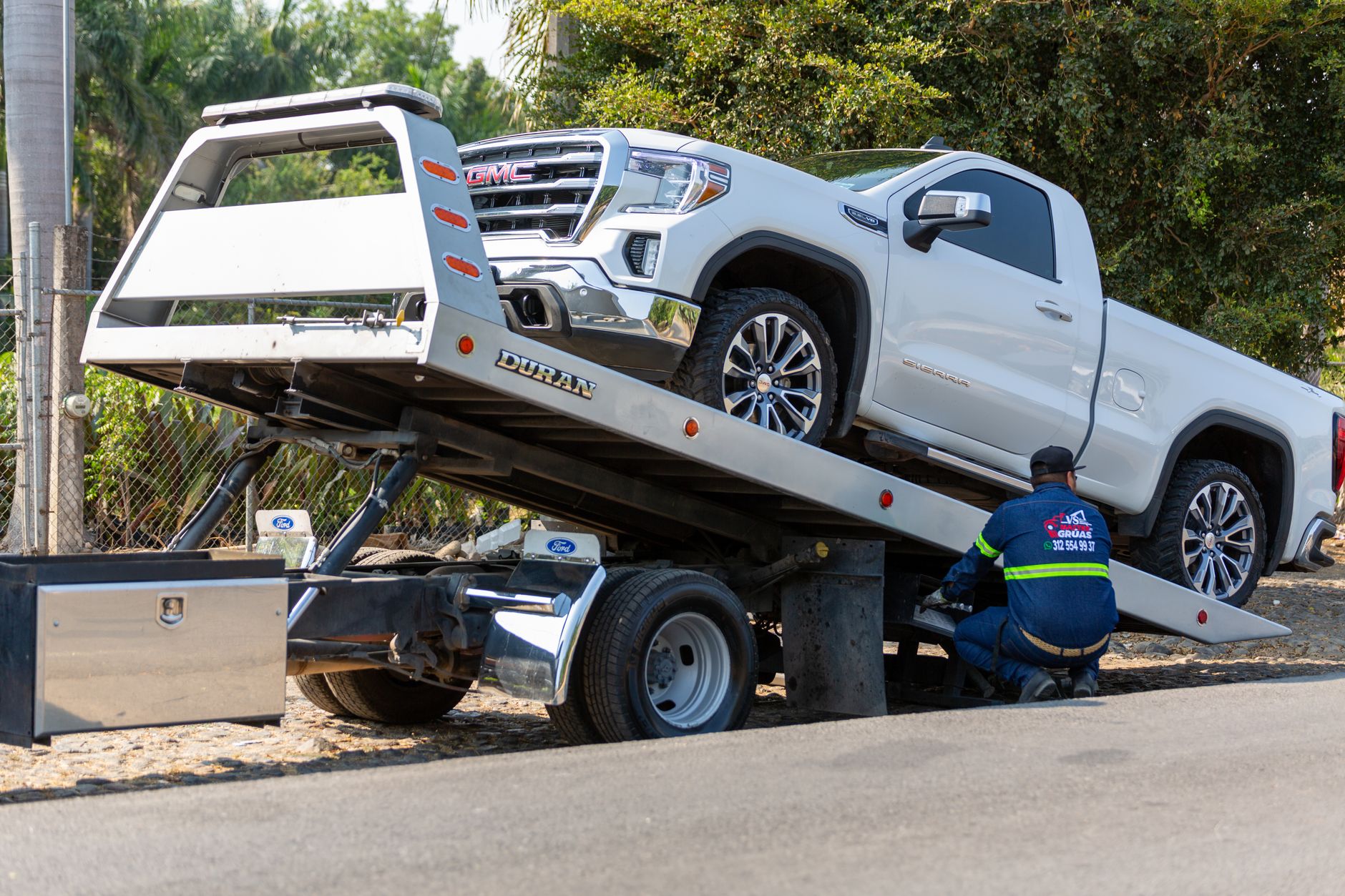
| Tow truck | Flashing amber warning lights | Operator winching a car onto a flatbed |
| Marked highway maintenance vehicle | Flashing amber warning lights | Caltrans truck, city road crew, or their contractors |
| Any other stationary vehicle | Flashing hazard lights or another warning device, including cones, flares, or retroreflective devices | A sedan on the shoulder with hazards on |
Subdivision (d) defines a “highway maintenance vehicle” as one used for maintaining highways and roadways in this state that is owned or operated by the Department of Transportation, a county, or a municipality, or by a contractor under contract with one of them. Caltrans trucks are squarely inside the statute, and so are the contractors doing the same work. The fourth category matters most to ordinary drivers: a stopped car marked by hazard lights, cones, or flares is covered too.
Why a Violation Matters for Fault, Not Just for a Ticket
California uses a doctrine called negligence per se, codified in Evidence Code section 669. Under subdivision (a), a failure to exercise due care is presumed if four things are true: the person violated a statute, ordinance, or regulation of a public entity; the violation proximately caused death or injury to person or property; the injury resulted from an occurrence of the nature the enactment was designed to prevent; and the injured person was within the class the enactment was adopted to protect.
A shoulder strike maps onto those elements cleanly. Section 21809 exists to keep traffic away from people stopped at the road’s edge, and being run down is the harm it was written to prevent. A tow operator, a road worker, a responder, and the occupant of a stopped car with hazards on all sit inside the protected class.
The presumption is not the end of the case. Section 669(b) lets the driver rebut it by showing they did what a person of ordinary prudence wanting to comply would have done. That rebuttal usually targets the statute’s second branch: the driver argues a lane change was unsafe and the speed carried was reasonable and prudent. Whether a given speed clears that standard is a fact question with no bright-line answer in California, so review it with an attorney rather than assuming a number settles it. Backstops remain either way: the basic speed law in Vehicle Code section 22350 and ordinary negligence still apply, and under pure comparative fault (Li v. Yellow Cab Co., 1975) partial carelessness reduces a recovery rather than ending it.
How Shoulder and Roadside Injury Claims Are Proven
These cases turn on evidence collected early, because the scene disappears within minutes. What decides them is the collision report, dashcam video, 911 audio, event data recorder downloads showing the passing vehicle’s speed and braking, and photographs fixing where cones and light bars sat. Expect the defense to argue the injured person stepped into the traffic lane, the hazards were off, or the vehicle sat at a blind curve. None of that defeats a claim in a pure comparative fault state, but each moves the percentages.
The scale is not speculative. A Federal Highway Administration report on data sources for first responder struck-by crashes cites National Law Enforcement Officers Memorial Fund figures showing 134 police officers killed in struck-by crashes between 2005 and 2014, about 13 a year, and states that more than 100 workers lose their lives annually in work zone settings, nearly a quarter struck or run over by non-construction vehicles. The same report cites research estimating the towing industry loses about 40 to 50 operators a year, roughly three-quarters in struck-by crashes.
Tow Operators, Caltrans Crews, and Road Workers: Two Claims, Not One
If you were on the clock when a driver hit you, two tracks run at once. Labor Code section 3602(a) makes workers’ compensation the sole and exclusive remedy against your employer, so you cannot sue your towing company or agency employer for pain and suffering. That bar does not touch the driver who hit you. Labor Code section 3852 preserves the employee’s right to sue a third party, and lets the employer or its carrier seek reimbursement from that recovery. Comp covers treatment and wages without a fault fight; the third-party case is where non-economic damages live.
A wrinkle applies when a public entity is on the other side. Caltrans is a public entity, so a claim against the agency itself (a work zone laid out dangerously, rather than a driver’s carelessness) must be presented in writing within six months of accrual under Government Code section 911.2, and section 945.6 then gives six months from a mailed rejection to sue. A Caltrans worker suing the driver who struck them, by contrast, brings an ordinary negligence case and needs no government claim.
What to Do If You Are Struck on the Shoulder in California
Get clear of live traffic first; secondary strikes are a real risk at roadside scenes. Then preserve the proof.
- Call 911 and make sure a collision report is generated, even if the driver stopped.
- Get a medical evaluation the same day; head, spine, and internal injuries often surface later.
- Photograph cone and flare placement, light bars, and skid marks before anything moves.
- Identify witnesses and dashcams, and if you were working, report the injury to your employer in writing the same day.
On timing, Code of Civil Procedure section 335.1 allows two years for an action for injury to, or the death of, an individual caused by the wrongful act or neglect of another. If a public entity may be a defendant, the six-month claim deadline under Government Code section 911.2 controls the practical calendar. Tolling and accrual are fact-specific, so confirm your deadline with an attorney.
Frequently Asked Questions
Does the California move over law apply only to police cars?
No. Vehicle Code section 21809 covers authorized emergency vehicles displaying emergency lights, plus tow trucks and marked highway maintenance vehicles displaying flashing amber warning lights. Subdivision (d) defines highway maintenance vehicles to include Caltrans, county, municipal, and contractor vehicles. The text also reaches any other stationary vehicle displaying flashing hazard lights or another warning device, such as cones or flares.
What is the penalty for violating the move over law in California?
Under subdivision (b) of section 21809, a violation is an infraction punishable by a fine of not more than fifty dollars, before court fees and assessments. Civil exposure is separate. A driver who injures someone by failing to move over can be liable for medical expenses, lost earnings, and pain and suffering, none of it limited by the fine.
If a driver broke the move over law, does that make them liable for my injuries?
Not automatically, but it is a strong starting position. Evidence Code section 669 presumes a failure to exercise due care when a person violated a statute, the violation proximately caused the injury, the injury was of the nature the statute was designed to prevent, and the injured person was within the protected class. A shoulder strike ordinarily satisfies all four. The presumption is rebuttable under section 669(b), and drivers often argue the lane change was unsafe and their speed prudent.
I was hurt working on the shoulder. Can I sue the driver and also file workers’ compensation?
Yes, and in serious cases both run at once. Labor Code section 3602 makes workers’ compensation the exclusive remedy against your employer, so you cannot sue the towing company or agency that employs you for pain and suffering. Labor Code section 3852 preserves your right to sue the third party who caused the harm, and that case can include damages comp never pays. Your employer or its carrier may claim reimbursement from the recovery.
How long do I have to bring a claim after being struck on the shoulder?
Code of Civil Procedure section 335.1 sets a two-year period for personal injury and wrongful death actions. If a public entity such as Caltrans is a potential defendant, Government Code section 911.2 requires a written claim within six months of accrual, and section 945.6 then allows six months from rejection to sue. Workers’ compensation has its own rules, so have your dates reviewed early.
Talk to a California Roadside Injury Attorney
If you were hit on the shoulder, the proof that decides your case is perishable. Our team investigates these claims across California and in Las Vegas, Nevada. Read how we approach car accident claims, truck accident claims, and catastrophic injury claims, then call (888) 977-2238 or reach us through our contact page.
This article is provided for general informational purposes only and does not constitute legal advice. Reading it does not create an attorney-client relationship. Every case is different and past results do not guarantee a similar outcome. If you have been injured, speak with a licensed attorney about your specific situation.