

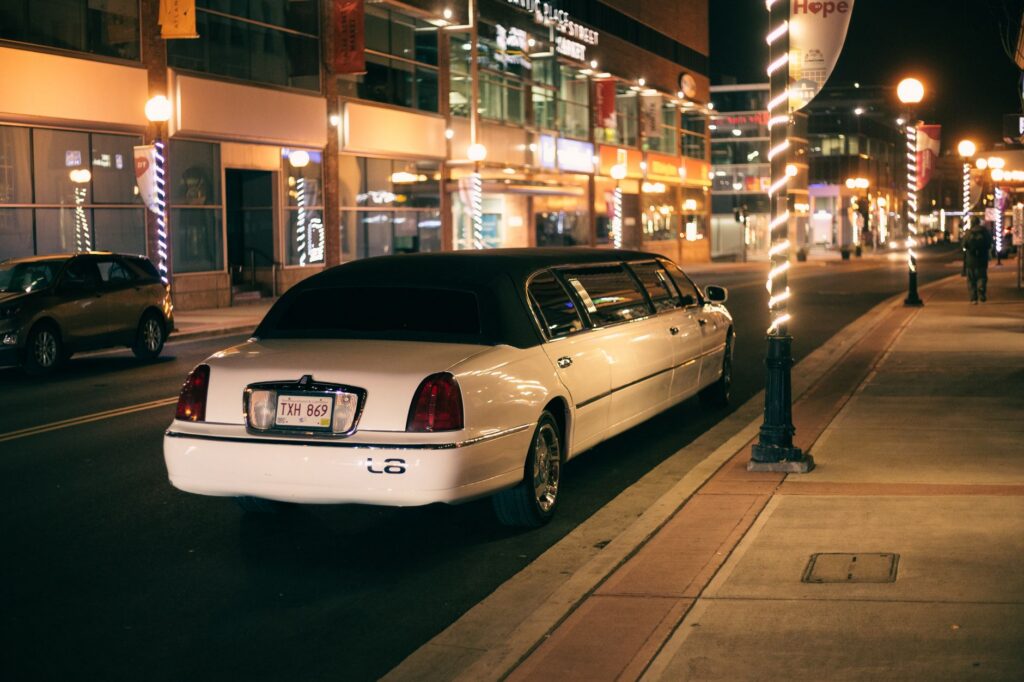
Limos in California are not ordinary cars for hire. An operator carrying passengers for compensation on a prearranged basis is a “charter-party carrier of passengers,” regulated by the California Public Utilities Commission and required to hold CPUC authority and commercial liability limits far above a private driver’s policy. And if it is a common carrier, it owes passengers the utmost care and diligence under Civil Code section 2100, not ordinary reasonable care.
We are B&D Injury Law Group, and we represent injured people across California and in Las Vegas, Nevada. Limousine and party bus claims turn on regulatory questions more than on who ran the light: what standard of care applied, whether the operator was permitted, and what the law required on the vehicle.
The Higher Standard of Care Owed to Limo and Party Bus Passengers
Civil Code section 2100 provides that “[a] carrier of persons for reward must use the utmost care and diligence for their safe carriage, must provide everything necessary for that purpose, and must exercise to that end a reasonable degree of skill.” Section 2101 adds that such a carrier “is bound to provide vehicles safe and fit for the purposes to which they are put, and is not excused for default in this respect by any degree of care.”
That changes what you must prove. In an ordinary collision case you show the other driver failed to act reasonably; against a common carrier you show it fell short of the utmost care. And under section 2101 an operator generally cannot defend an unfit vehicle by arguing it was careful.
The threshold question is whether the operator is a common carrier. Civil Code section 2168 defines one broadly: anyone “who offers to the public to carry persons.” CACI No. 901, the instruction on disputed status, points to whether the company kept a regular place of business, advertised to the general public, and charged standard fees, and notes a carrier can qualify without a fixed route, schedule, or license.
The honest limit: we are not aware of a published California decision making every charter-party limousine operator a common carrier automatically. A company with published rates and a fleet open to anyone who calls looks nothing like one vehicle on a single private arrangement.
How California Licenses Limos and Party Buses
The governing law is the Passenger Charter-party Carriers’ Act, Public Utilities Code section 5351 and following. Section 5360 reaches “every person engaged in the transportation of persons by motor vehicle for compensation, whether in common or contract carriage, over any public highway in this state.” Section 5371 bars operating without CPUC authority; the services listed in section 5384 may instead run on a permit. In the trade these are TCP authorities.
Obtaining one is not a formality. Section 5374 requires an applicant to show it can comply with California Highway Patrol safety rules, run a CHP-conforming maintenance program, observe hours-of-service limits, pull driving records, keep an inspectable terminal, and take part in mandatory drug and alcohol testing. Each obligation generates paperwork, and paperwork decides these cases.
Insurance is the other half. Section 5391 directs the Commission to require adequate protection against liability, and the minimums come from CPUC General Order 115-G, effective August 18, 2016 and amended March 21, 2024. They scale with seating capacity:
| Vehicle seating capacity | Minimum liability protection |
|---|---|
| 8 or fewer, including the driver | $750,000 |
| 9 to 15, including the driver | $1,500,000 |
| 16 or more, including the driver | $5,000,000 |

The Emergency-Exit Rules Written After the 2013 San Mateo Bridge Fire
On May 4, 2013, a stretch limousine carrying a bridal party caught fire on the San Mateo-Hayward Bridge. Five passengers died; several others escaped only by climbing through the partition window. The San Francisco Chronicle reported the deaths at the time and later reported that investigators ruled the fire accidental. It was not our case. We describe it because it produced the statute below.
The Legislature responded with Senate Bill 109 (Corbett, 2013), codified at Vehicle Code section 27375. Vehicle Code section 378 defines a “modified limousine” as one stretched past the manufacturer’s published wheelbase to fit more passengers.
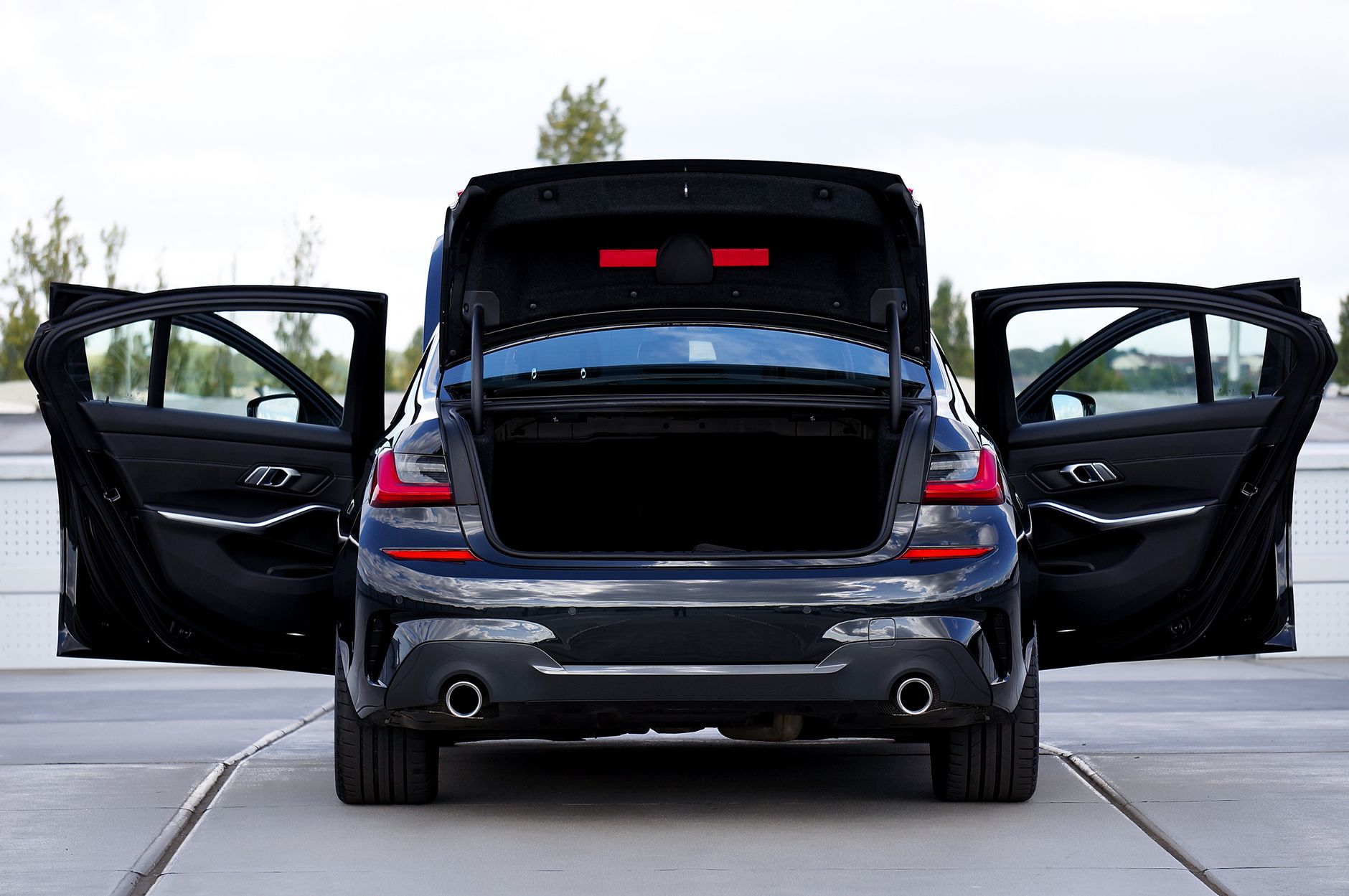
Section 27375 requires a modified limousine to have at least two rear side doors, rear windows passengers can open from inside, and at least two rear push-out windows, one per side, or in the roof where the design prevents side placement. For limousines modified on or after July 1, 2015, one rear door must sit toward the driver’s compartment and another toward the back; for limousines modified before July 1, 2015, the push-out window requirements applied from January 1, 2018. A narrow exemption covers pre-1970 limousines holding a TCP number issued before August 15, 2013.
Two duties in the statute are easy to miss and often decisive. Subdivision (b) requires the driver, in an emergency requiring immediate exit, to unlock the doors so passengers can open the rear side doors. Subdivision (c) requires the operator to brief passengers on the safety features before the trip and disclose whether the vehicle complies. If nobody briefed you, write that down now.
Alcohol on Board: What California’s Rules Actually Do
Drinking in a hired limo is legal in a way it is not in a private car. Vehicle Code section 23229 exempts passengers and drivers of buses, taxicabs and limousines for hire from the open container rules, “[e]xcept as provided in Section 23229.1.” That section applies those rules to a charter-party driver carrying a passenger under 21 who fails to comply with Public Utilities Code section 5384.1.
Section 5384.1 requires the carrier to ask the chartering party, up front, whether alcohol will be aboard and whether anyone will be under 21. If both are true, a designee aged 25 or older must be present, check identification, read a statutory warning, and return a signed acknowledgment at least 72 hours before the trip. Otherwise the carrier must supply a designee, lock the alcohol in the trunk, keep minors off, or cancel.
Now the part people get wrong. California has no broad dram shop law. Business and Professions Code section 25602(a) makes it a misdemeanor to furnish alcohol to an obviously intoxicated person, but subdivision (b) says the furnisher is not civilly liable for injuries that person later inflicts. Civil Code section 1714(b) agrees: consumption, not furnishing, is the proximate cause. Section 1714(c) protects social hosts.
The exceptions are narrow. Section 1714(d) reaches an adult who knowingly furnishes at his or her residence to someone under 21, and Business and Professions Code section 25602.1 reaches a licensee or seller who serves an obviously intoxicated minor. Neither tends to fit a limo operator: it is usually not an alcohol licensee, and a moving vehicle is not a residence. The stronger theory is the carrier’s own conduct: its section 5384.1 compliance and the standard of care it owed. Section 5384.1 adds that nothing in it reduces the liability of someone who knowingly provides alcohol to a minor; how far that reaches against the immunity statutes is an open question.
Who Is Responsible, and How to Check the Operator’s Permit
The operator answers for its driver. Under respondeat superior and Civil Code section 2338, a principal is responsible to third persons for its agent’s negligence in transacting the business of the agency. It can also be directly liable for its own failures: the section 5374 maintenance program, driving-record checks, training, and vehicle fitness under Civil Code section 2101. A maintenance contractor or the coachbuilder that stretched the vehicle may belong in the case too.
You can check the permit yourself. Public Utilities Code section 5385 requires the carrier to display a distinctive identifying symbol showing its classification, and it may not be displayed before CPUC authority issues, so photograph the vehicle. The CPUC runs a public search for licensed passenger carriers through its TCPortal. If the operator had no authority, the coverage you expect may not exist, and the analysis shifts to the driver’s policy and your own uninsured motorist coverage under Insurance Code section 11580.2.
Deadlines and the Evidence That Disappears First
The deadline to sue for personal injury in California is two years under Code of Civil Procedure section 335.1. If a public entity is involved, Government Code section 911.2 requires a written government claim within six months, and missing it is usually fatal. The evidence timeline is shorter still. Waybills, dispatch records, driver files, maintenance records and video all sit with the operator, and retention cycles overwrite video fast. A written preservation demand in the first days is the most useful single step.
Frequently Asked Questions
Are limos in California considered common carriers?
Often, but not automatically. Civil Code section 2168 defines a common carrier as anyone who offers to the public to carry persons, and CACI No. 901 asks whether the operator kept a regular place of business, advertised to the public, and charged standard fees. When the facts are undisputed a court decides it as a matter of law; otherwise it goes to the jury.
How much insurance must a California limo or party bus company carry?
Under CPUC General Order 115-G, effective August 18, 2016 and amended March 21, 2024, the minimum is $750,000 for vehicles seating 8 or fewer, including the driver, $1,500,000 for 9 to 15, and $5,000,000 for 16 or more, under Public Utilities Code section 5391. These are floors; a large party bus crash can leave several claimants sharing one policy.
Can I sue a limo company because alcohol was served on board?
Usually not on a dram shop theory. Business and Professions Code section 25602(b) and Civil Code section 1714(b) make consumption, not furnishing, the legal cause of alcohol-related harm, and the exceptions rarely fit a limousine operator. A claim built on the carrier’s own duties under section 5384.1 and its standard of care is usually stronger.
What emergency exits must a stretch limousine have in California?
Vehicle Code section 27375 requires a modified limousine to have at least two rear side doors, rear windows passengers can open from inside, and at least two rear push-out windows. The driver must unlock the doors in an emergency, and the operator must brief passengers on those features before the trip.
How do I find out whether a limo or party bus operator was licensed?
Start with the vehicle. Public Utilities Code section 5385 requires a charter-party carrier to display a distinctive identifying symbol showing its classification, and it cannot lawfully appear before CPUC authority issues, so photograph it. The CPUC also runs a public search for licensed passenger carriers.
If you were hurt riding in a limousine or a party bus, the records that decide your claim sit with the operator and do not keep forever. We handle these cases through our bus accident attorneys and truck accident attorneys practices, and where burns or a brain injury are involved, our catastrophic injury attorneys practice. Tell us what happened on our contact page.
This article is provided for general informational purposes only and does not constitute legal advice. Reading it does not create an attorney-client relationship. Every case is different and past results do not guarantee a similar outcome. If you have been injured, speak with a licensed attorney about your specific situation.