

Quick answer
The value of a California brain injury claim depends mainly on severity and permanence, future care needs, lost earning capacity, the quality and consistency of medical documentation, and the insurance available. There is no reliable average settlement. California's pure comparative negligence rule reduces your recovery by your share of fault rather than barring the claim.
If you or someone you love is dealing with a traumatic brain injury (TBI) after a car accident, a fall, or another accident, you’ve probably searched for one thing: a number. What is this claim actually worth? It’s a fair question, and an urgent one when medical bills are piling up and you don’t know if you can go back to work yet.
The honest answer is that there is no single number, and no calculator you can plug your details into and trust completely. But there is a real, understandable framework that insurance companies and courts use to value a TBI claim in California. Here is how it actually works, in plain English.
Why There’s No Single “Average” Settlement Number
You will find websites listing large verdict numbers for past brain injury cases, some in the hundreds of thousands and some in the millions. Those numbers describe real cases, but on their own they can mislead. A jury verdict reflects one case’s specific facts: a specific defendant, judge, and jury. It says very little about what your case is worth. Two people with what looks like “the same” diagnosis can end up with very different claim values depending on their age, job, recovery, and the strength of their evidence.
Instead of chasing an average, it helps to understand the actual categories of damages a claim is built from, and the factors that push value up or down within those categories.
The Two Types of Damages in a California TBI Claim
California law recognizes two categories of personal injury damages, economic and non-economic, and Civil Code § 1431.2 defines both terms.
Economic damages are what the statute calls objectively verifiable monetary losses, the losses you can attach a receipt or a calculation to:
- Past medical bills (ER visits, imaging, hospitalization, neurology, rehabilitation)
- Future medical care, often based on a “life care plan” prepared by medical and financial experts for more serious injuries
- Lost wages from time already missed
- Lost future earning capacity, if the injury affects your ability to work long-term
Non-economic damages are the subjective, non-monetary losses that don’t come with an invoice:
- Pain and suffering
- Loss of enjoyment of life
- Emotional distress
- In some cases, a spouse’s separate claim for loss of consortium, a claim the California Supreme Court recognized in Rodriguez v. Bethlehem Steel Corp. (1974)
For a mild concussion with a full recovery, economic damages are often modest, and the claim resolves around actual bills plus a period of pain and suffering. For moderate to severe TBIs with lasting cognitive or physical effects, future economic damages (years or decades of care) are frequently what drive total value far higher than the medical bills paid so far.
How Injury Severity Affects Value
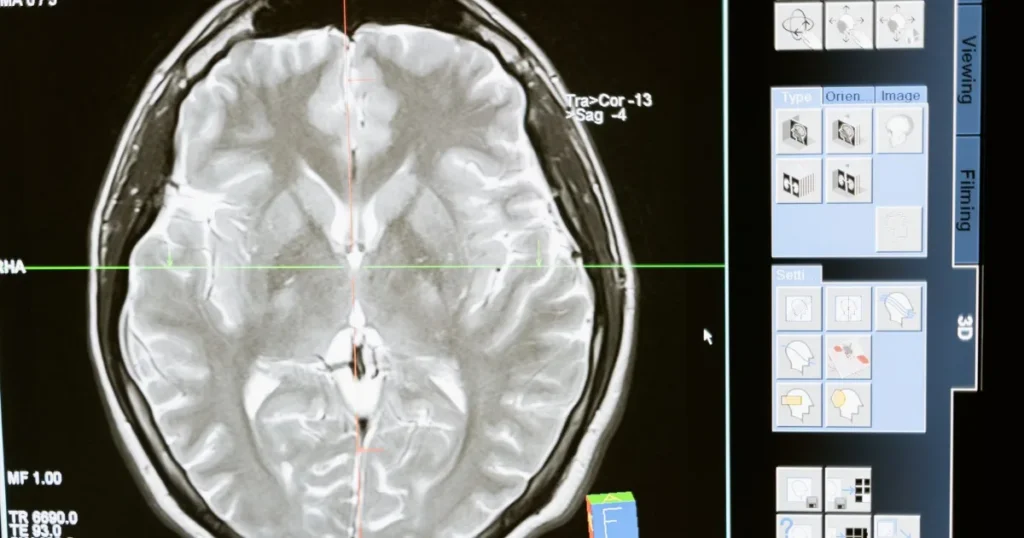
Not all brain injuries are the same, and insurers know it. According to the CDC, most traumatic brain injuries that occur each year are mild TBIs or concussions, but that label can be misleading. As the Mayo Clinic explains, diagnosis starts with symptoms and history, with imaging used to check for bleeding or swelling in or around the brain. Moderate to severe TBIs can involve bruising, torn tissue, and bleeding in the brain, with complications ranging from seizures and infections to lasting cognitive and behavioral changes.

In practice, this tends to break down as:
- Mild TBI with full recovery within weeks to months generally sits at the lower end of claim value, though it is still a real injury that deserves compensation.
- Mild TBI with persistent post-concussion symptoms (headaches, memory or concentration problems, mood changes lasting months) increases value, especially when documented consistently by a neurologist.
- Moderate to severe TBI, especially with permanent cognitive, physical, or behavioral impairment, typically produces the highest claim values, because of extensive future care needs and lost earning capacity.
For more on how these injuries can surface after a crash, see our post on delayed symptoms after a car accident, and for the most serious bleeding injuries, our guide to epidural vs. subdural hematomas.
Other Factors That Raise or Lower Your Claim’s Value
Comparative negligence. California follows the “pure comparative negligence” rule adopted by the California Supreme Court in Li v. Yellow Cab Co. (1975): your compensation is reduced by your percentage of fault, but you are not barred from recovering even if you were mostly at fault. If you were found 20% at fault for the collision that caused your TBI, your recovery is generally reduced by 20%. Our post on the role of comparative negligence in California car accidents explains the mechanics.
Insurance policy limits. This is one of the most overlooked factors. A claim can be “worth” a large number on paper, but if the at-fault driver carries only the state minimum liability coverage and has few personal assets, actual recovery may be shaped by what’s available: through their policy, your own uninsured/underinsured motorist coverage under Insurance Code § 11580.2, or other responsible parties.
Documentation and consistency of treatment. Gaps in treatment or inconsistent complaints give insurers an argument that the injury wasn’t serious or wasn’t caused by the accident. Consistent follow-up with the same providers strengthens a claim.
Age, occupation, and life expectancy. A permanent cognitive impairment affecting a 30-year-old’s decades-long career generally supports a higher future lost-earnings claim than the identical impairment for someone near retirement.
Settlement vs. Verdict: Know the Difference
Personal injury claims, including TBI claims, commonly resolve through a negotiated settlement rather than a jury verdict. A verdict is a jury’s decision after a full trial; a settlement is an agreement both sides accept instead of taking on that risk and delay. When you see large “verdict” numbers cited online, remember that a verdict reflects one jury’s decision on one set of facts, not a guarantee of what any other case, including yours, will bring. Settlement negotiations typically weigh the same damages categories described above against the uncertainty, cost, and time of going to trial.
Why Many Serious TBI Claims Take Time to Resolve
Attorneys often wait until a patient reaches “maximum medical improvement” (the point where a doctor expects no further significant recovery) before finalizing a demand. Settling too early, before the full extent of future care needs is clear, risks underselling a serious claim. This is a major reason serious TBI cases can take longer to resolve than a straightforward fender-bender claim. Waiting to settle is not the same as waiting to act, though: California’s filing deadlines still apply, so see our guide to how long you have to sue after a car accident in California.
Frequently Asked Questions
Is there an average settlement amount for a traumatic brain injury claim in California?
We are not aware of any reliable, independently verified statewide average. TBI claims vary enormously by severity, liability, insurance coverage, and individual circumstances, which is why a case-specific evaluation matters far more than any published “average.”
Does a mild concussion diagnosis mean my claim isn’t worth much?
Not necessarily. A concussion with symptoms that last for months, supported by consistent medical documentation, can still support a meaningful claim. Value depends on the documented impact of the injury, not just the initial diagnosis label.
What is a life care plan, and do I need one?
A life care plan is a detailed projection, usually prepared by medical and financial experts, of future medical and support needs. It’s typically used in moderate to severe TBI cases where ongoing care is expected, and it often becomes a central piece of valuing future economic damages.
Can I still recover compensation if I was partly at fault for the accident?
Generally yes. California’s pure comparative negligence rule, adopted in Li v. Yellow Cab Co. (1975), reduces your compensation by your percentage of fault rather than eliminating your claim entirely.
Do I need a lawyer to find out what my claim is worth?
You don’t need one just to ask the question, but insurance adjusters often evaluate claims using internal guidelines that can undervalue future care and non-economic losses. An attorney can help make sure documentation, expert input, and negotiation reflect the claim’s full value.
Talk to B&D Law Group, APLC About Your Case
No article, calculator, or list of past verdicts can tell you exactly what your brain injury claim is worth. That takes a real review of your medical records, your treatment, and the specific facts of what happened to you. B&D Law Group, APLC, based in Los Angeles, offers free, no-pressure consultations for people injured in Los Angeles and across Southern California. Call (888) 977-2238 whenever you’re ready to talk through your options.
This article is general information about California law, not legal or medical advice. Reading it, or contacting B&D Law Group, APLC, does not create an attorney-client relationship. Every case is different, results depend on the specific facts of each case, and no outcome, settlement amount, or timeline is ever guaranteed. Past results do not guarantee a similar outcome.
Related Reading
- Head injuries can arise on amusement rides as well as on the road. Read who is liable for an amusement park ride injury under California law.
- Proving the injury is the other half of valuing it. Read how to prove a traumatic brain injury claim in California.
- Brain Injuries from Car Accidents: Symptoms You Should Never Ignore
- Catastrophic Injury Attorneys — B&D Law Group